








What's Happening?
The Trump administration has filed lawsuits against Oregon, Washington, Maine, and Massachusetts for their refusal to issue undercover license plates to federal agents. This legal action is part of an ongoing conflict between state sanctuary policies
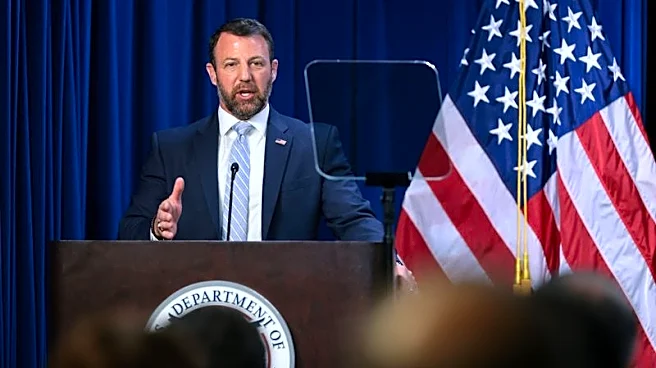
and federal immigration enforcement efforts. The U.S. Department of Justice argues that the states' decisions are unconstitutional, citing the supremacy clause of the U.S. Constitution. Acting U.S. Attorney General Todd Blanche stated that denying these plates to federal agencies, while issuing them to state and local law enforcement, obstructs federal immigration enforcement and endangers public safety. The lawsuits follow warnings from the Justice Department to the states' officials, including Oregon Governor Tina Kotek. Oregon's transportation department had stopped issuing these plates in mid-April, citing potential legal challenges related to state sanctuary laws.
Why It's Important?
This legal battle highlights the ongoing tension between federal and state governments over immigration enforcement. The outcome could have significant implications for how sanctuary states interact with federal agencies, potentially affecting the enforcement of immigration laws across the country. If the Trump administration succeeds, it could set a precedent that limits states' abilities to enact policies that protect undocumented immigrants. Conversely, a loss for the administration could embolden other states to adopt similar sanctuary policies, further complicating federal immigration enforcement efforts. The case underscores the broader debate over states' rights versus federal authority, particularly in areas like immigration where policies can have profound social and economic impacts.
What's Next?
The states involved are expected to review the lawsuits and determine their legal strategies. Oregon's DMV is currently reviewing its policy on issuing undercover plates, and the outcome of this review could influence the state's response. The legal proceedings will likely involve arguments about the interpretation of the supremacy clause and the extent of state versus federal authority. The case could eventually reach higher courts, potentially setting a national precedent. Stakeholders, including state governments, federal agencies, and immigrant advocacy groups, will be closely monitoring the developments, as the decision could impact immigration policy and enforcement nationwide.