









What's Happening?
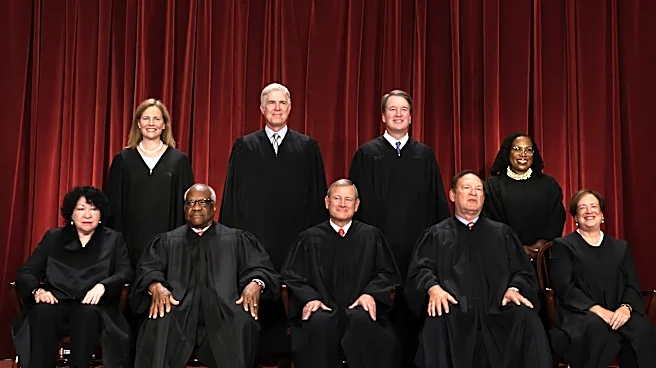
The Supreme Court has ruled that broad sweeps of cellphone location data require warrants, extending constitutional privacy protections to digital information. The 6-3 decision, authored by Justice Elena Kagan, arose from a case involving a bank robbery
in Virginia, where police used a geofence warrant to identify Okello Chatrie as a suspect. The court emphasized that individuals do not forfeit their privacy rights by opting into services like Google's location history. The ruling sends the case back to a lower court to assess the reasonableness of the search under the Fourth Amendment.
Why It's Important?
This decision underscores the evolving interpretation of privacy rights in the digital age, reinforcing the need for legal safeguards against broad data collection practices. It challenges the notion that voluntarily shared data with third parties can be freely accessed by the government, potentially reshaping how law enforcement and tech companies handle user data. The ruling could lead to more stringent requirements for obtaining warrants and influence future privacy-related cases and policies.
What's Next?
The case will return to a lower court to determine if the search was justified, which could further clarify legal standards for digital data collection. The decision may prompt legislative efforts to address privacy concerns and establish clearer guidelines for tech companies and law enforcement. It also sets a precedent that could impact future cases involving digital privacy and data protection.