







What's Happening?
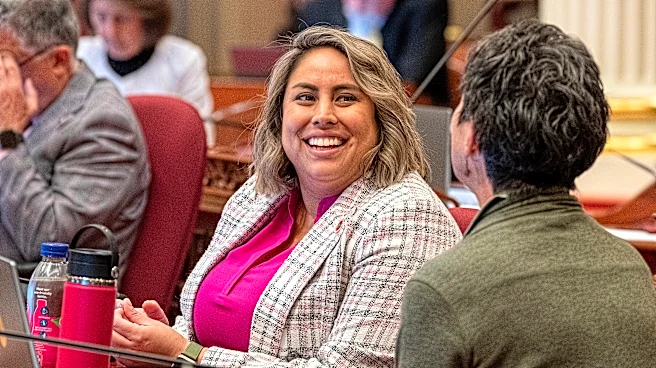
The Philadelphia City Council has passed a significant legislative package known as the 'ICE Out' legislation, aimed at restricting immigration enforcement activities within the city. This package, consisting of seven bills, was introduced by Councilmember
At-Large Kendra Brooks and Councilmember At-Large Rue Landau. The legislation prohibits U.S. Immigration and Customs Enforcement (ICE) agents from wearing masks or using unmarked vehicles, mandates the display of badges, and restricts city agencies from collaborating with ICE without a judicial warrant. It also bans ICE raids on city-owned properties and prohibits discrimination based on citizenship or immigration status. The passage of these bills was met with celebration from immigrant rights organizations and community members, who see it as a victory for immigrant communities in Philadelphia.
Why It's Important?
The 'ICE Out' legislation represents a significant shift in how local governments can interact with federal immigration enforcement, potentially setting a precedent for other cities. By limiting ICE's ability to operate freely within Philadelphia, the city is taking a stand against federal immigration policies that many local leaders and residents view as overly aggressive and harmful to immigrant communities. This move could inspire similar actions in other cities, contributing to a broader national debate on the role of local governments in immigration enforcement. The legislation also highlights the growing influence of immigrant advocacy groups in shaping local policy, reflecting a shift towards more inclusive and protective measures for immigrant populations.
What's Next?
Following the passage of the 'ICE Out' legislation, the focus will shift to its implementation. Advocates and city officials will need to ensure that the new laws are effectively enforced and that city agencies comply with the new restrictions. There may be legal challenges from federal authorities or other entities opposed to the legislation, which could impact its implementation. Additionally, the legislation's success in Philadelphia could prompt other cities to consider similar measures, potentially leading to a patchwork of local immigration policies across the country.