






What's Happening?
The Trump administration has revitalized the Monroe Doctrine, originally issued by President James Monroe in 1823, to prevent extra-regional powers from intervening in the Western Hemisphere. This policy, known as the 'Donald Trump Corollary,' aims to deny
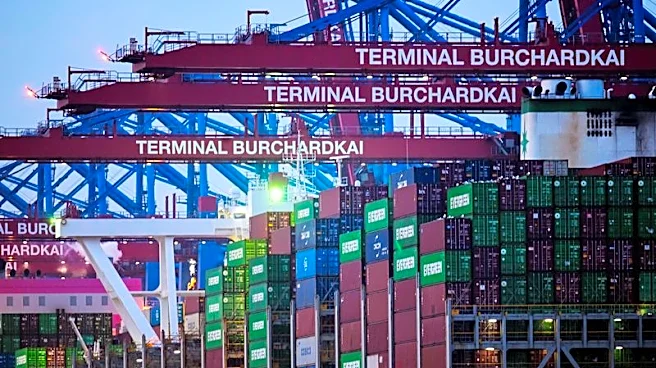
non-Hemispheric competitors, primarily China, the ability to position forces or control strategically vital assets in Latin America. China's expanding presence in the region, through trade, infrastructure, and defense cooperation, has prompted the U.S. to pursue countermeasures. The U.S. is leveraging relationships with other extra-regional actors like the European Union and India to reinforce its position and curb Chinese influence.
Why It's Important?
The revitalization of the Monroe Doctrine signifies a strategic pivot in U.S. foreign policy, emphasizing hemispheric autonomy and U.S. supremacy in economic, diplomatic, and military affairs. China's growing influence in Latin America poses a threat to U.S. interests, as it becomes a leading trading partner and expands its infrastructure projects. The U.S. aims to reassert its dominance by securing supply chains, imposing tariffs, and engaging in defense cooperation. This approach could impact U.S. relations with Latin American countries and shape the geopolitical landscape in the region.
What's Next?
The success of U.S. policies in Latin America remains uncertain, as they face domestic opposition and geopolitical challenges. The U.S. will continue to monitor China's activities and strengthen alliances with regional and extra-regional partners. Future actions may include increased military cooperation, trade agreements, and infrastructure projects to counter China's influence. The U.S. may also leverage its relationships with the EU and India to enhance its strategic position in the region.
Beyond the Headlines
The U.S. strategy in Latin America reflects broader geopolitical dynamics, as it seeks to contain China's influence globally. The Monroe Doctrine's revival highlights the U.S.'s commitment to maintaining control over the Western Hemisphere, a long-standing trait of its foreign policy. The involvement of extra-regional actors like the EU and India suggests a collaborative approach to addressing China's multidimensional penetration of Latin America.