




What's Happening?
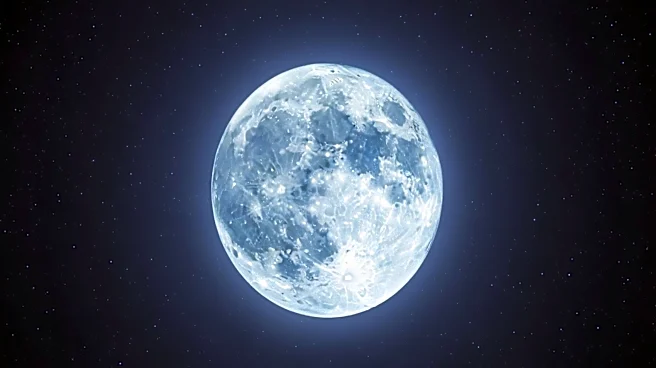
The concept of a 'blue moon' is often misunderstood, but it refers to two distinct astronomical events. A seasonal blue moon occurs when there are four full moons in a single season, with the third being designated as the blue moon. The next occurrence
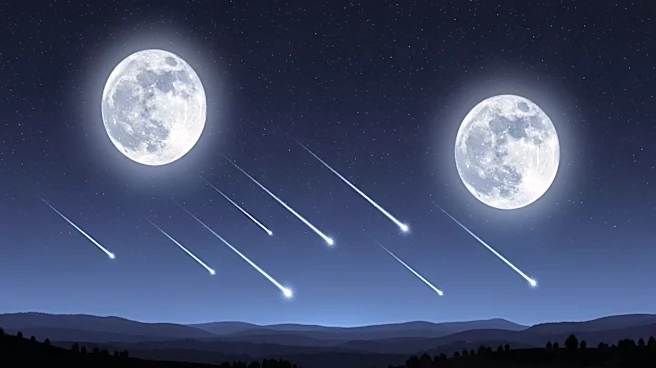
of this type will be on May 20, 2027. The more commonly known definition involves two full moons in a single month, with the second being called a blue moon. This phenomenon will next occur on December 31, 2028. Historically, between 1550 and 2650, there have been 408 seasonal and 456 monthly blue moons. The term 'blue moon' does not relate to the moon's color, which only appears blue under specific atmospheric conditions like smoke or volcanic ash. The next double blue moon, a rare event where two blue moons occur in a single year, will happen in 2037.
Why It's Important?
Understanding blue moons is significant for both astronomical enthusiasts and the general public, as it demystifies a common phrase and highlights the regularity of celestial events. These occurrences provide opportunities for educational outreach and public engagement with astronomy. The rarity of double blue moons, occurring only three to five times a century, adds a layer of intrigue and excitement for skywatchers. Such events can boost interest in astronomy and related sciences, potentially inspiring future generations of scientists and astronomers. Additionally, these phenomena can have cultural and historical significance, as they have been observed and recorded for centuries.
What's Next?
The next few years will see several blue moons, with the next seasonal blue moon on May 20, 2027, and the next monthly blue moon on December 31, 2028. These events will likely be accompanied by public interest and media coverage, providing opportunities for educational institutions and observatories to engage with the public. The anticipation of the double blue moon in 2037 may also lead to special events and gatherings for skywatchers. As these dates approach, astronomers and educators will likely prepare to offer insights and observations to enhance public understanding and appreciation of these celestial events.