





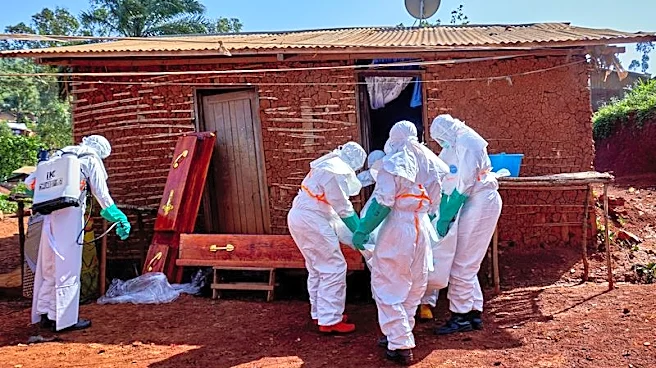



What's Happening?
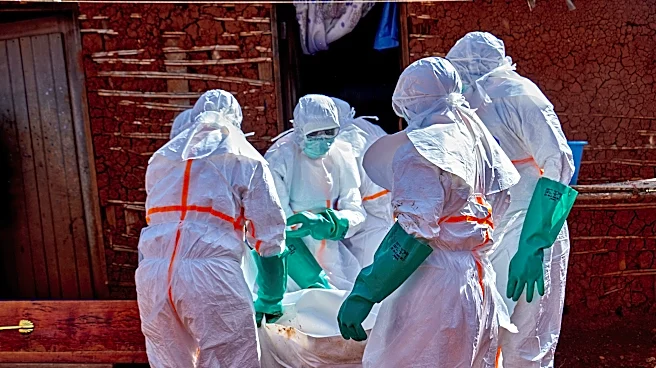
An Ebola outbreak in eastern Congo has become one of the largest on record, exacerbated by the dismantling of U.S. foreign aid programs. The outbreak, caused by the Bundibugyo strain of Ebola, spread undetected for months due to reduced disease surveillance
and response capabilities. The U.S. had previously played a crucial role in global health systems, but recent budget cuts and withdrawal from the World Health Organization have hindered early detection and response efforts. The outbreak has resulted in hundreds of cases and deaths, with the potential to escalate further.
Why It's Important?
The situation highlights the critical role of international cooperation and funding in managing global health crises. The reduction in U.S. aid has weakened the infrastructure needed to detect and respond to outbreaks, increasing the risk of widespread transmission. This case underscores the importance of sustained investment in global health systems to prevent and contain infectious diseases. The outbreak serves as a warning of the potential consequences of reducing support for international health initiatives, which can have far-reaching impacts on global public health security.
What's Next?
Efforts to contain the outbreak will require increased international collaboration and funding. The U.S. may face pressure to restore its role in global health leadership and reconsider its funding cuts. The outbreak could prompt a reevaluation of global health priorities and the need for robust early-warning systems. There may also be calls for policy changes to ensure that critical health infrastructure is maintained and strengthened to prevent future outbreaks. The international community will need to address the challenges of responding to health crises in conflict-affected regions.