


What's Happening?
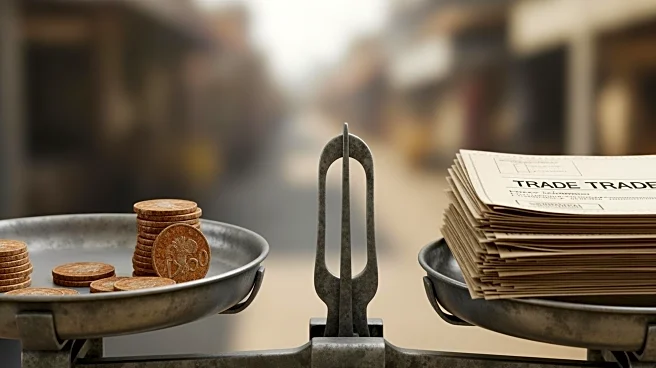
Hundreds of traders and customs clearance company owners in Baghdad protested against new customs tariffs imposed by the Iraqi government. These tariffs, effective from January 1, are part of an effort to reduce Iraq's debt and reliance on oil revenues,
which have been affected by falling oil prices. The tariffs have increased costs significantly, with some fees rising from 3 million to 14 million dinars per container. The protests, which included a nationwide strike by shop owners, highlighted the financial strain on traders and citizens, with accusations of corruption in customs processes.
Why It's Important?
The imposition of new tariffs in Iraq is a critical economic measure aimed at diversifying revenue sources beyond oil, which accounts for 90% of the country's income. However, the backlash from traders underscores the challenges of implementing such policies without exacerbating economic hardships for businesses and consumers. The increased costs could lead to higher prices for goods, affecting citizens with limited incomes. The situation also highlights issues of corruption and inefficiency in customs operations, which could deter trade and investment.
What's Next?
The Iraqi Federal Supreme Court is set to rule on a lawsuit challenging the new tariffs. The outcome could influence future economic policies and the government's approach to balancing fiscal responsibility with economic growth. Traders may seek alternative routes for imports, such as through the Kurdistan region, if tariffs remain high. The government will need to address corruption allegations to restore confidence in its economic reforms.