





What's Happening?
New research conducted by The Brattle Group for The Pew Charitable Trusts reveals that widespread deployment of distributed energy resources (DERs) could save the U.S. power system $614 billion in costs through 2050. This significant saving is achievable
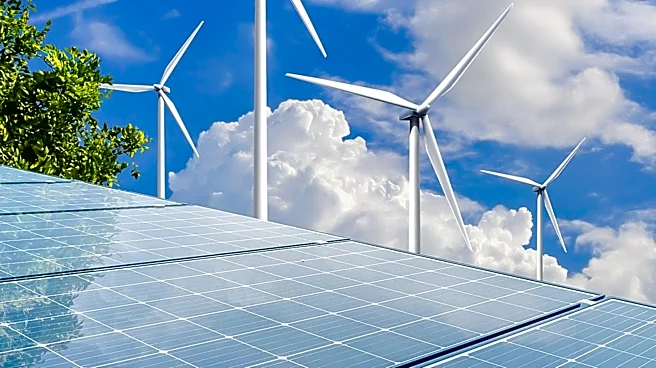
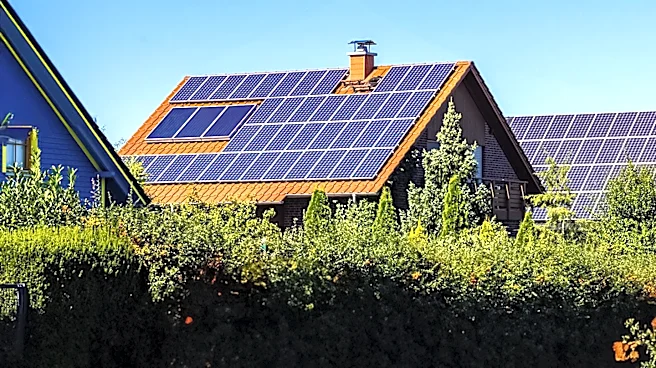
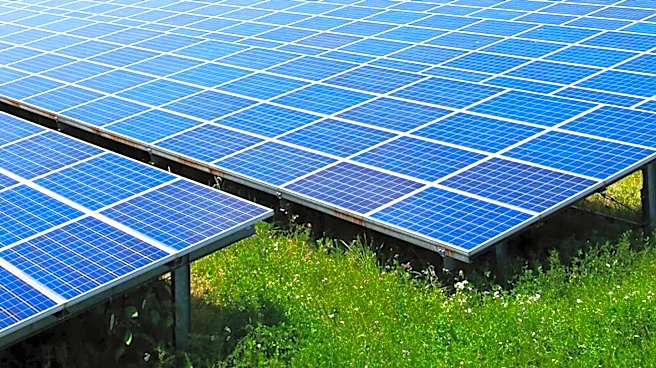
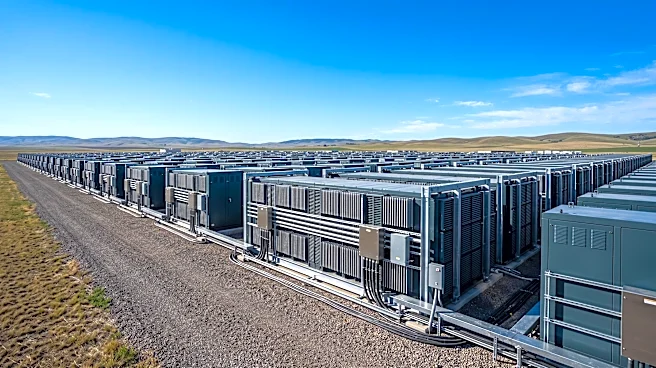
if key policy and regulatory barriers are removed, allowing DER capacity to more than quadruple to 524 gigawatts (GW) by 2050. The study highlights that DERs, such as rooftop solar and battery storage, can make electricity more affordable by reducing the projected increase in average annual U.S. household electricity bills by half in inflation-adjusted dollars by 2035. Furthermore, expanding DER deployment could defer the need for costly traditional infrastructure, potentially saving $33 billion by avoiding overinvestment in new power plants for demand that may not fully materialize. The research also indicates that increased DER capacity could help avoid the need for approximately 70 GW of natural gas-fired power generation, equivalent to about 175 gas plants, and cumulatively reduce carbon emissions by 863 million metric tons through 2050.
Why It's Important?
This research underscores a pivotal opportunity for the U.S. to transform its energy landscape, addressing both economic and environmental challenges. The potential for over half a trillion dollars in savings directly impacts U.S. households and businesses by making electricity more affordable and stable. By reducing reliance on traditional, often fossil-fuel-based, power plants, DERs contribute significantly to decarbonization efforts, aligning with national climate goals. The ability of DERs to mitigate risks of overinvestment in large-scale infrastructure provides greater flexibility and efficiency in energy planning. This shift also empowers consumers with more control over their energy consumption and production, fostering a more resilient and decentralized grid. For policymakers, the findings present a clear economic incentive to remove existing barriers to DER deployment, accelerating the transition to a cleaner, more affordable, and reliable energy system across the nation.
What's Next?
To unlock these substantial benefits, the research suggests that state policymakers need to implement reforms in several key areas. These include streamlining local permitting processes for DER installations, improving interconnection and grid access protocols, and integrating DERs more effectively into distribution planning. The Pew Charitable Trusts has previously recommended these policies in its DER policy playbook. If these policy and regulatory barriers are eliminated, the U.S. could see a significant acceleration in DER deployment, leading to the projected cost savings and emissions reductions. Utilities and grid operators will need to adapt their planning and operational strategies to fully incorporate DERs as foundational components of the energy system. Continued advocacy and collaboration among state governments, utilities, and energy stakeholders will be crucial to drive the necessary policy changes and infrastructure investments to realize the full potential of distributed energy resources.
Beyond the Headlines
The implications of widespread DER adoption extend beyond immediate cost savings and emissions reductions. This shift represents a fundamental re-imagining of the U.S. power grid, moving from a centralized model to a more distributed, resilient, and interactive network. Such a transformation could foster significant innovation in energy technology, business models, and consumer engagement. It also raises important questions about grid management, cybersecurity in a decentralized system, and equitable access to DER benefits across different socioeconomic groups. The modular nature of DERs allows for more localized energy independence and resilience, particularly in the face of increasing climate-related disruptions. Ultimately, embracing DERs at this scale could redefine the relationship between energy producers, distributors, and consumers, paving the way for a more democratic and sustainable energy future for the United States.