






What's Happening?
The Philippines and India have agreed to enhance their cooperation in maritime security, defense modernization, and military exchanges. This agreement was reached during discussions between Philippine Defense Secretary Gilberto Teodoro Jr. and Indian
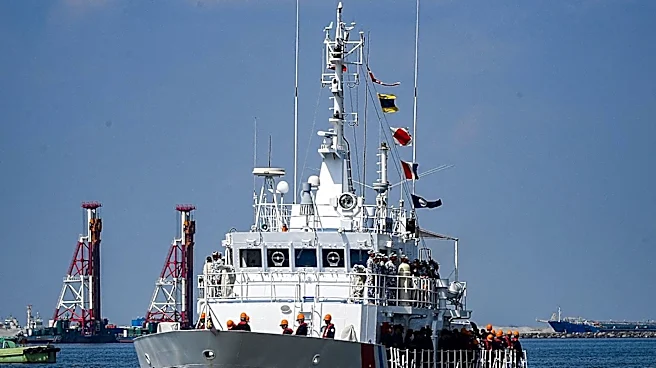
Defense Minister Rajnath Singh in Cebu on October 28. The talks focused on deepening strategic ties between the two nations, particularly in areas crucial for regional stability. This development signifies a growing alignment between the Philippines and India in addressing shared security concerns in the Indo-Pacific region. The discussions also touched upon potential future collaborations that could include joint training exercises and intelligence sharing, aiming to bolster the defense capabilities of both countries. This move is part of a broader effort by both nations to secure their maritime interests and contribute to a free and open Indo-Pacific.
Why It's Important?
This enhanced cooperation is significant for several reasons. For the Philippines, it provides an opportunity to diversify its defense partnerships and acquire advanced military technology, contributing to its ongoing defense modernization efforts. Given the complex geopolitical landscape in the South China Sea, strengthening ties with India, a major regional power, can offer strategic advantages and support for maritime domain awareness. For India, closer defense relations with the Philippines align with its 'Act East' policy, expanding its influence and presence in Southeast Asia. This partnership can help counter-balance other regional powers and promote a more stable security environment. The collaboration also underscores a shared commitment to international law and freedom of navigation, which are critical for global trade and security. Both nations stand to gain from increased interoperability and shared expertise in addressing common security challenges, including piracy, terrorism, and natural disasters.
What's Next?
Following the agreement, both countries are expected to outline specific initiatives and timelines for implementing the enhanced cooperation. This could include working groups to identify areas for defense modernization, scheduling joint military exercises, and establishing mechanisms for regular military exchanges. The Philippines may explore acquiring defense equipment from India, potentially including missile systems or naval assets, as part of its modernization program. India, in turn, might offer training programs and technological assistance to the Philippine armed forces. Further diplomatic engagements and defense dialogues are anticipated to solidify these commitments. The broader implications could see increased naval presence and joint patrols in strategic waterways, reinforcing a rules-based international order in the Indo-Pacific. Both nations will likely continue to seek opportunities to collaborate on regional security forums and initiatives.
Beyond the Headlines
The deepening defense ties between the Philippines and India reflect a broader trend of middle powers in the Indo-Pacific seeking to forge stronger security partnerships amidst evolving geopolitical dynamics. This collaboration is not just about military hardware but also about building trust and interoperability between their armed forces. It signals a strategic recalibration in the region, where countries are increasingly looking beyond traditional alliances to secure their national interests. Ethically, this partnership could be seen as a commitment to collective security and the peaceful resolution of disputes, promoting stability in a region often marked by territorial tensions. Legally, it reinforces adherence to international maritime law and norms. Culturally, such exchanges can foster greater understanding and cooperation between the two nations' military establishments, laying the groundwork for long-term strategic alignment and mutual support in addressing complex security challenges.