





What's Happening?
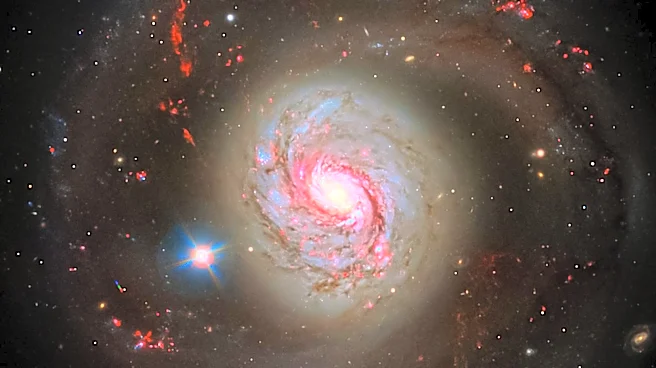
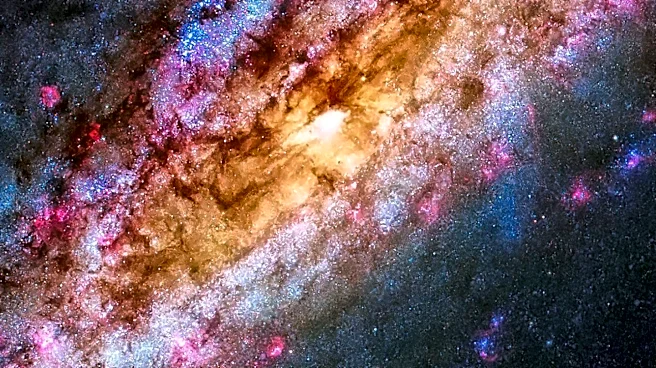
The Vera C. Rubin Observatory in Chile has captured an image of over 650,000 galaxies using the largest camera ever built, weighing more than three tons. This achievement is part of the observatory's 10-year mission to create a time-lapse record of the southern
sky, known as the Legacy Survey of Space and Time. The image focuses on the Cosmic Evolution Survey Deep Field (COSMOS field), a region first photographed by the Hubble Space Telescope in 2003. The Rubin Observatory aims to add a temporal dimension to previous observations, enhancing the understanding of cosmic evolution.
Why It's Important?
The Rubin Observatory's work is significant for advancing the study of cosmic evolution and understanding the universe's structure. By capturing such a vast number of galaxies, the observatory provides a comprehensive dataset that can be used to study galaxy formation, dark matter, and dark energy. This research is crucial for developing models of the universe's past and future. The observatory's findings will also support the scientific community by providing a reference for future astronomical studies.