




What's Happening?
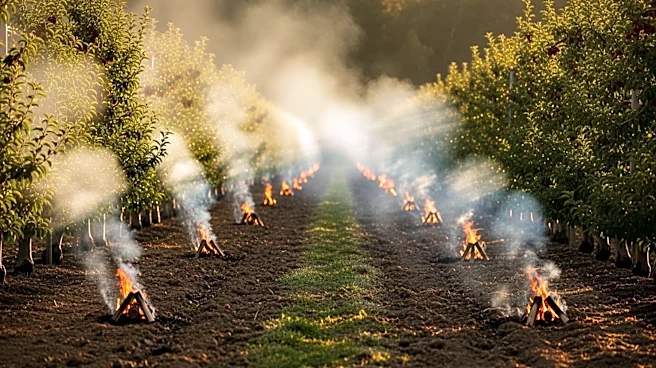
A farm in Colorado's Western Slope region employed an innovative method to protect its orchard from a sudden spring freeze. Faced with snow and freezing temperatures, the farm lit nearly 100 campfires to create warmth and prevent damage to the blooming
plants. This creative approach highlights the challenges faced by farmers in managing unpredictable weather conditions and the lengths they will go to safeguard their crops. The use of campfires is a traditional technique that can help raise the temperature around the plants, reducing the risk of frost damage.
Why It's Important?
The incident illustrates the vulnerability of agriculture to climate variability and the impact of unexpected weather events on crop production. For farmers, such conditions can threaten livelihoods and lead to significant economic losses. The use of campfires as a protective measure reflects the need for adaptive strategies in agriculture to cope with climate challenges. This event may encourage other farmers to explore similar or alternative methods to mitigate the effects of adverse weather. It also highlights the importance of ongoing research and support for the agricultural sector to develop resilient practices in the face of climate change.