







What's Happening?
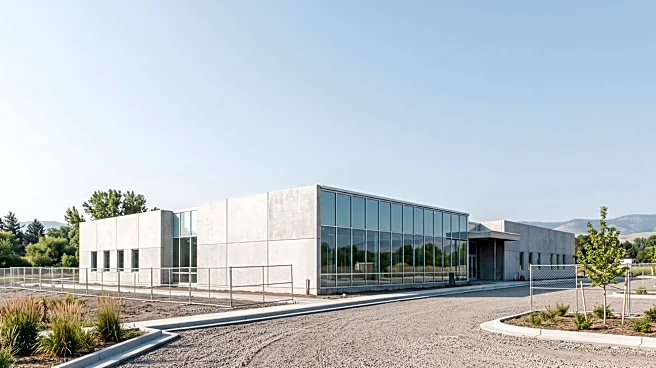
Construction has commenced on a new behavioral health crisis center at the Indian Family Health Clinic in Great Falls. The project, which began on Thursday, October 29, aims to provide short-term crisis care for individuals experiencing mental health or substance
use crises. The center will offer a safe space for support, rest, and connections to ongoing treatment, serving as an alternative to jail or emergency departments for first responders. The Cascade County Sheriff’s Office is leading the initiative in collaboration with the Indian Family Health Clinic, Many Rivers Whole Health, and the Great Falls Police Department. The clinic is providing the second-floor space at 1220 Central Ave., with Many Rivers Whole Health expected to staff the facility. Funding for the project includes a $1.4 million Crisis Diversion Grant from the Montana Department of Public Health and Human Services, with $1 million allocated to the center and $400,000 for a mobile response team.
Why It's Important?
This new behavioral health crisis center is a critical development for Great Falls, addressing a significant gap in mental health and substance use crisis services. By offering an alternative to traditional law enforcement or hospital interventions, the center aims to provide more appropriate and effective care for vulnerable individuals. Cascade County Sheriff Jesse Slaughter emphasized that people in mental health crises do not belong in jail, highlighting the humanitarian aspect of the project. The coordinated approach, including a mobile response team, ensures that individuals can access immediate support and be connected to long-term resources. This initiative has the potential to reduce the burden on emergency services and the criminal justice system, while improving outcomes for those in crisis. It represents a proactive step towards a more compassionate and efficient system of care.
What's Next?
The construction of the behavioral health crisis center is projected to be completed by June 2027, with the goal of opening receiving services by July 2027. Before the center can open, abatement of hazardous materials, including asbestos and lead, will begin in the coming weeks, followed by a full rebuild of the space. Initially, the center will offer intake services, allowing individuals to stay for up to 23 hours and 59 minutes. A later phase is planned to add stabilization services for longer stays, potentially up to two weeks, though no exact timeline for this phase has been set. The mobile response team is expected to begin operating by the end of 2026, providing immediate support in the community. The center will be staffed by clinicians, peer supports, and care coordinators to facilitate connections to community resources.
Beyond the Headlines
The establishment of this behavioral health crisis center reflects a growing national trend towards diverting individuals with mental health and substance use issues from the criminal justice system and into appropriate care. This shift acknowledges the limitations of traditional law enforcement and emergency medical services in addressing complex behavioral health needs. The project in Great Falls highlights the importance of inter-agency collaboration and community partnerships in developing comprehensive crisis response systems. The federal Brownfields funding secured for site preparation also underscores the broader economic and environmental considerations often involved in urban development projects, even those focused on social services. This initiative could serve as a model for other communities seeking to improve their behavioral health infrastructure and provide more humane and effective care.