





What's Happening?
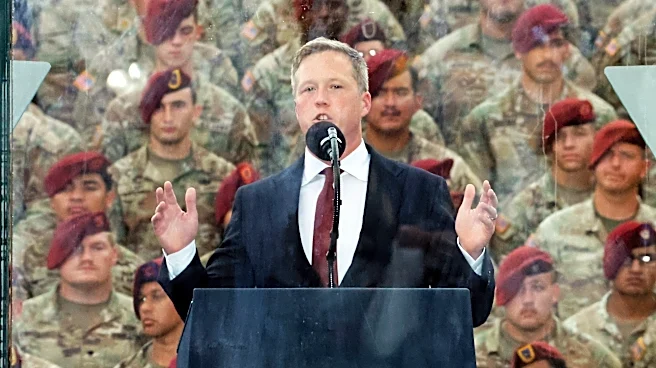
Army Secretary Dan Driscoll has submitted his resignation to President Trump after serving 18 months in the role, as confirmed by the White House on Monday. No specific reason was provided for Driscoll's departure. This resignation marks another instance
of a senior military official leaving during the Trump administration and follows reports of ongoing tensions between Driscoll and Defense Secretary Pete Hegseth. The Wall Street Journal was the first to report this development. White House spokeswoman Anna Kelly issued a statement acknowledging Driscoll's effectiveness in advancing President Trump's agenda, highlighting his leadership in military operations, focus on readiness and lethality, and involvement in negotiations between Russia and Ukraine. Driscoll, an Iraq War veteran and business investor, was nominated by President Trump in 2024 and confirmed by the Senate in February 2025. His confirmation hearing primarily addressed Army modernization, recruitment, and strengthening the defense industrial base. He also played an unusual role in diplomatic efforts to end the Russia-Ukraine war and advocated for accelerating the Army's acquisition of drone and counter-drone technology.
Why It's Important?
The resignation of Army Secretary Dan Driscoll is significant as it represents a continued trend of high-level departures within the military leadership during the current administration. This turnover could potentially impact the stability and continuity of ongoing military initiatives and strategic planning. The reported tensions with Defense Secretary Pete Hegseth suggest internal disagreements at the highest echelons of the Department of Defense, which might affect policy coherence and operational efficiency. Driscoll's involvement in sensitive diplomatic efforts, such as negotiating an end to the Russia-Ukraine war, indicates a broader role beyond traditional Army secretarial duties. His departure could leave a void in these critical areas, potentially altering the administration's approach to international conflicts and military modernization. Furthermore, his advocacy for drone technology acquisition underscores a focus on future warfare capabilities, and a change in leadership might influence the pace and direction of these technological advancements. The repeated changes in senior Army leadership, including the earlier removal of Gen. Randy George and Gen. Christopher Donahue, could also raise concerns about morale and long-term strategic vision within the U.S. Army.
What's Next?
Following Army Secretary Dan Driscoll's resignation, the immediate next step will be the search for and nomination of his successor. This process will involve President Trump selecting a candidate, who will then undergo Senate confirmation. The new Secretary will face the challenge of maintaining continuity in the Army's modernization efforts, recruitment strategies, and the ongoing emphasis on readiness and lethality. Given the reported tensions with Defense Secretary Pete Hegseth, the incoming Secretary will likely need to navigate complex inter-departmental relationships. The White House's statement praised Driscoll's role in assisting with Russia-Ukraine negotiations, suggesting that his replacement may also be expected to engage in diplomatic efforts, depending on their background and the administration's priorities. The focus on speeding up the acquisition of drones and counter-drone technology is a critical area that the new leadership will need to address, potentially influencing future defense spending and technological development. The broader implications for the U.S. Army's strategic direction and its role in global affairs will depend heavily on the vision and priorities of the new Secretary and their ability to work effectively within the existing defense framework.
Beyond the Headlines
The resignation of Army Secretary Dan Driscoll, particularly without a stated reason and amidst reports of tension with the Defense Secretary, highlights deeper questions about civil-military relations and the dynamics of power within the executive branch. The frequent turnover of senior military officials could signal a broader challenge in aligning the military's institutional priorities with the political objectives of the administration. This situation might lead to a perception of instability or politicization within the armed forces, potentially affecting the military's non-partisan standing. Driscoll's dual role in military leadership and diplomatic negotiations, such as those concerning Russia and Ukraine, blurs the traditional lines between defense and foreign policy, raising questions about the scope of authority and responsibilities for future Army Secretaries. The emphasis on 'Make America Strong Again' in the White House statement, while a political slogan, also underscores the administration's specific ideological lens through which military leadership is evaluated. This context suggests that future appointments may prioritize individuals who are perceived as strong proponents of the administration's broader political agenda, potentially at the expense of traditional military career paths or expertise. The long-term impact could be a shift in how military leadership is selected and how it operates within the U.S. political landscape.