
What's Happening?
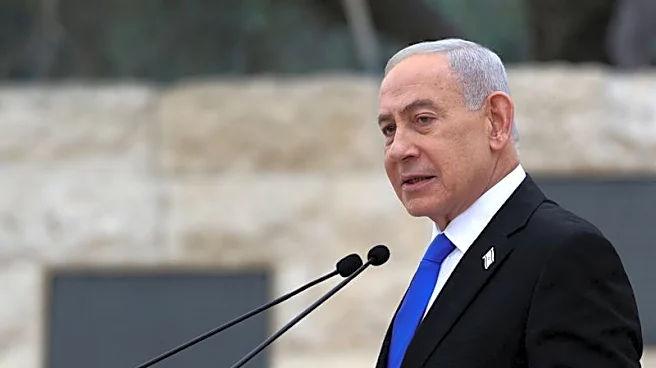
Israeli Prime Minister Benjamin Netanyahu has declared that the conflict with Iran remains unresolved despite a U.S.-brokered ceasefire. In a recent interview on CBS's '60 Minutes,' Netanyahu emphasized
the necessity of removing highly enriched uranium from Iran and dismantling its nuclear enrichment facilities. He acknowledged that while significant progress has been made in degrading Iran's nuclear capabilities, including its proxy forces and missile production, the threat persists. International monitors estimate that Iran retains approximately 970 pounds of nearly bomb-grade uranium. Netanyahu suggested that reaching an agreement to remove this material would be the optimal solution, though he refrained from detailing the consequences if such an agreement is not achieved.
Why It's Important?
The ongoing tension between Israel and Iran has significant implications for regional stability and international security. Netanyahu's insistence on the removal of enriched uranium underscores the persistent threat posed by Iran's nuclear capabilities. This situation affects U.S. foreign policy and its diplomatic relations in the Middle East, as the U.S. has been instrumental in brokering ceasefires and negotiating nuclear agreements. The potential for renewed conflict could disrupt global oil markets and impact economic conditions worldwide. Additionally, the situation highlights the challenges of nuclear non-proliferation and the complexities of enforcing international agreements.
What's Next?
The future of the Iran-Israel conflict hinges on diplomatic negotiations and potential agreements regarding Iran's nuclear material. The international community, including the U.S., may need to engage in further diplomatic efforts to ensure compliance and prevent escalation. Monitoring and verification by international agencies will be crucial in assessing Iran's nuclear activities. The outcome of these negotiations could influence broader geopolitical dynamics in the Middle East, affecting alliances and power balances. Stakeholders, including regional powers and global entities, will likely continue to advocate for peaceful resolutions while preparing for potential contingencies.