





What's Happening?
The European Commission has approved a €100 million Austrian scheme aimed at enhancing clean technology manufacturing capacity. This initiative aligns with the objectives of the Clean Industrial Deal, which seeks to transition towards a net-zero economy.
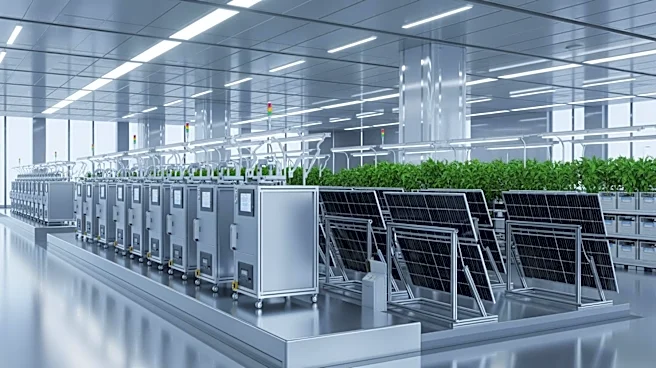
The scheme, approved under the Clean Industrial Deal State Aid Framework (CISAF), will provide subsidized loans to small, medium, and large enterprises investing in strategic sectors such as batteries, solar panels, and windmills in Austria. The aid is available until December 31, 2026, and is designed to ensure sufficient manufacturing capacity for clean technologies. The Commission found the scheme necessary and proportionate to accelerate the transition towards a net-zero economy, facilitating the development of economic activities crucial for the Clean Industrial Deal's implementation.
Why It's Important?
This approval is significant as it supports the European Union's broader goals of reducing carbon emissions and fostering sustainable economic growth. By incentivizing the production of clean technologies, the scheme aims to strengthen Austria's position in the cleantech sector, potentially leading to increased innovation and job creation. The initiative also reflects the EU's commitment to achieving its climate targets and reducing dependency on fossil fuels. For businesses, this scheme offers financial support to invest in green technologies, which could enhance competitiveness and sustainability. The broader impact includes potential shifts in industrial processes towards more environmentally friendly practices, contributing to global efforts to combat climate change.
What's Next?
The Austrian scheme is part of a larger EU strategy to support the green transition across member states. As the scheme progresses, it is expected to attract investments in clean technology sectors, potentially leading to advancements in renewable energy and low-carbon solutions. The success of this initiative could influence similar schemes in other EU countries, promoting a unified approach to achieving net-zero emissions. Stakeholders, including businesses and policymakers, will likely monitor the scheme's impact on Austria's cleantech industry and its contribution to the EU's climate goals. Future developments may include additional funding or policy adjustments to further support the green transition.