

What's Happening?
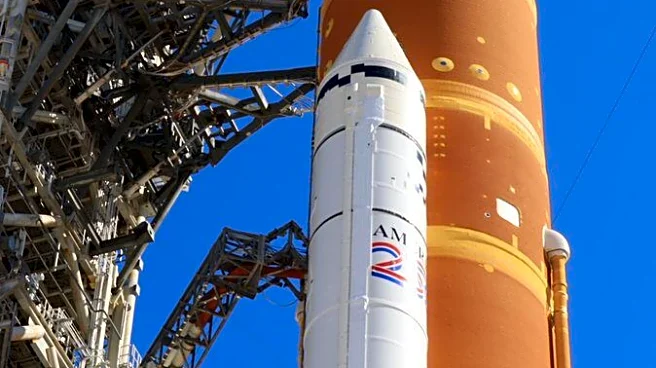
NASA is contemplating rolling back the Artemis II rocket launch after discovering an interrupted helium flow in the Space Launch System's interim cryogenic propulsion stage. This issue, identified shortly after NASA announced a March 6 launch date, is critical
as helium flow is necessary for the launch process. The Artemis II mission, involving a 10-day trip around the moon, is a precursor to Artemis III, which aims to land humans on the moon by 2028. The mission's astronauts, including three Americans and one Canadian, are currently in quarantine in preparation for the launch.
Why It's Important?
The potential rollback of the Artemis II launch underscores the technical challenges involved in space exploration. This mission is pivotal for testing systems required for future deep-space exploration, including the planned Artemis III moon landing. Delays in the Artemis program can have cascading effects on NASA's timeline for lunar exploration and its broader goals of establishing a sustainable human presence on the moon. The situation highlights the importance of thorough testing and problem resolution in ensuring mission success and astronaut safety.
What's Next?
NASA is evaluating whether to conduct repairs at the launch pad or move the rocket back to the Vehicle Assembly Building. The decision will impact the mission's timeline, with the earliest possible launch now pushed to April. NASA will continue to monitor and address the helium flow issue to ensure the Artemis II mission proceeds safely and successfully. The agency's efforts will be crucial in maintaining the momentum of the Artemis program and achieving its long-term exploration goals.