
What's Happening?
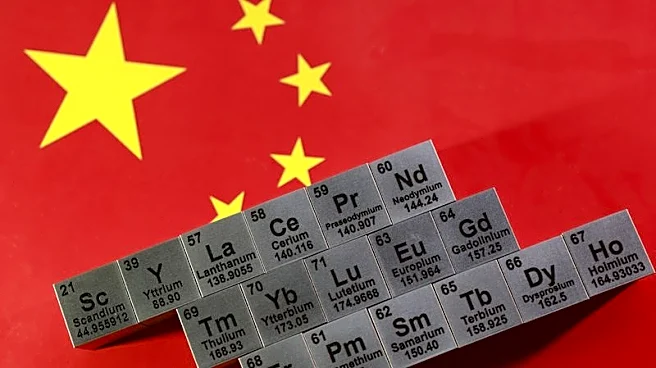
U.S. President Donald Trump and Brazilian President Luiz Inácio Lula da Silva are collaborating to diversify rare earth supply chains away from China. This partnership was highlighted during a recent meeting
at the White House, where both leaders discussed the potential for Brazil to become a key supplier of rare earth minerals to the U.S. The discussions come as the U.S. seeks to reduce its dependency on China for these critical minerals, which are essential for various technologies, including semiconductors and military applications. Brazil, holding the world's second-largest reserves of rare earths, is seen as a strategic partner in this endeavor. However, challenges such as environmental licensing delays and local opposition to mining projects pose significant hurdles to realizing this potential.
Why It's Important?
The collaboration between the U.S. and Brazil on rare earths is significant as it represents a strategic shift in global supply chains, aiming to reduce reliance on China. This move could have substantial implications for U.S. industries reliant on these minerals, potentially stabilizing supply and prices. For Brazil, this partnership offers an opportunity to attract investment and technology transfer, boosting its mining sector. However, the execution of this partnership faces challenges, including bureaucratic hurdles and environmental concerns, which could delay the benefits. The outcome of this collaboration could influence global geopolitical dynamics, particularly in the context of U.S.-China relations.
What's Next?
The next steps involve navigating the complex regulatory and environmental landscape in Brazil to facilitate the development of rare earth projects. Both countries will need to address local opposition and streamline licensing processes to expedite project timelines. The U.S. may also need to negotiate terms that align with Brazil's desire for domestic processing and value addition. The success of this partnership could set a precedent for future collaborations in the critical minerals sector, potentially reshaping global supply chains.