





What's Happening?
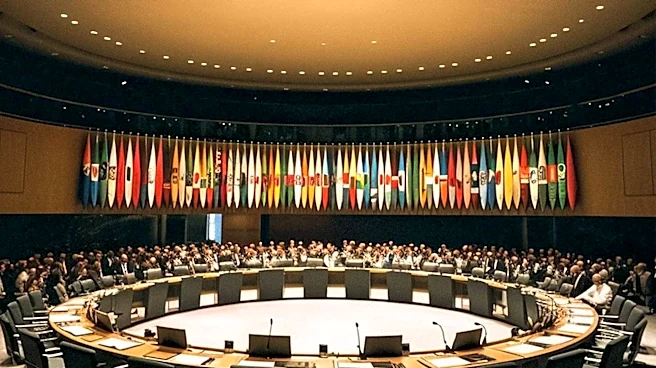
The CMI – Martti Ahtisaari Peace Foundation participated in the Paris Peace Forum, focusing on the changing dynamics of peace mediation and cooperation among states, regional organizations, and private diplomacy actors. The forum, themed 'From Sovereignty
to Cooperation,' gathered government officials, heads of state, and representatives from international organizations, think tanks, NGOs, and the private sector. Discussions largely centered on the need to redefine existing principles and tools in response to a perceived faltering international order. Key topics included the role of middle powers, new actors, geoeconomics, and the balance between diplomacy and deterrence. CMI's Acting CEO Hanna Klinge spoke on a panel about new actors and coalitions in peace mediation, emphasizing the importance of clarifying roles and complementarity, particularly highlighting the contribution of private diplomacy in bridging various actors and mediation tracks. Jibecke Joensson, Head of Multilateral Affairs and Peacemaking Policy for CMI, noted the paradoxical need to build coalitions while strengthening sovereignty and strategic autonomy.
Why It's Important?
The discussions at the Paris Peace Forum are crucial for understanding the evolving landscape of international relations and conflict resolution. The emphasis on redefining peace mediation principles reflects a global acknowledgment that traditional approaches may no longer be sufficient in a fragmented and geopolitically tense world. The focus on middle powers and new actors suggests a shift in the distribution of influence in peacemaking efforts, potentially leading to more diverse and inclusive mediation processes. The call for complementarity between state and private diplomacy actors could enhance the effectiveness of peace initiatives by leveraging different strengths and resources. For the U.S., these developments could influence its foreign policy strategies, requiring adaptation to new forms of international cooperation and engagement with a broader range of actors in conflict zones. The forum's insights into geoeconomics and the balance between diplomacy and deterrence are also vital for U.S. policymakers as they navigate complex global challenges and seek to maintain stability.
What's Next?
The insights and discussions from the Paris Peace Forum are expected to inform future strategies for peace mediation and international cooperation. The ongoing need to redefine principles and tools suggests that organizations like CMI will continue to advocate for adaptive and inclusive approaches. The focus on complementarity between state and private diplomacy actors indicates a potential for increased collaboration in future peace efforts, with private entities playing a more recognized role. Further engagement with middle powers and new actors in peacemaking is likely to be a continuing trend. The forum's emphasis on building coalitions and cooperation frameworks, even while strengthening sovereignty, points towards a future where multilateralism might take on more flexible and interest-driven forms. These evolving dynamics will likely influence how international bodies and individual nations, including the U.S., approach global conflicts and diplomatic engagements.
Beyond the Headlines
The Paris Peace Forum's discussions on a 'faltering international order' and the need to redefine peace mediation principles highlight a deeper systemic challenge to global governance. The 'paradoxical need' to build coalitions while strengthening sovereignty reflects the tension between global interdependence and national interests, a central dilemma in contemporary international relations. The increasing recognition of private diplomacy actors suggests a blurring of lines between traditional state-centric diplomacy and non-state engagement, potentially leading to more agile and less bureaucratic approaches to conflict resolution. However, this also raises questions about accountability and legitimacy in private mediation efforts. The forum's forward-looking approach, moving beyond past and present issues to reimagine cooperation models, indicates a significant shift in thinking among international policy circles, acknowledging that incremental adjustments may no longer suffice to address complex global challenges. This intellectual shift could pave the way for innovative, albeit potentially disruptive, changes in how peace and security are pursued globally.