



What's Happening?
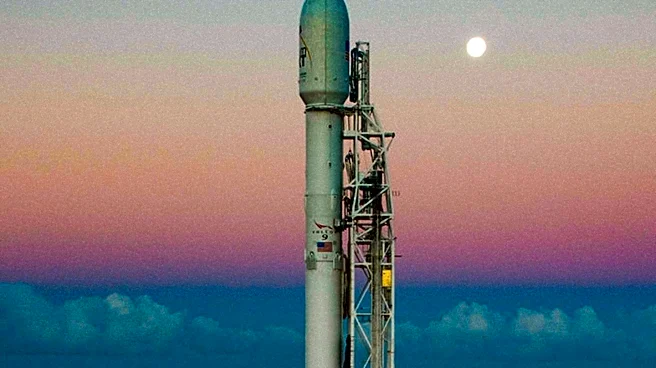
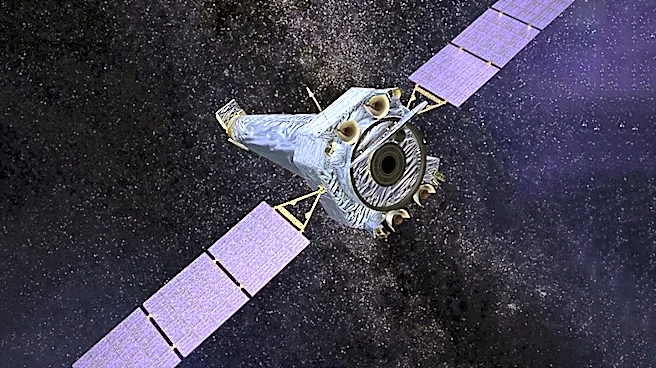
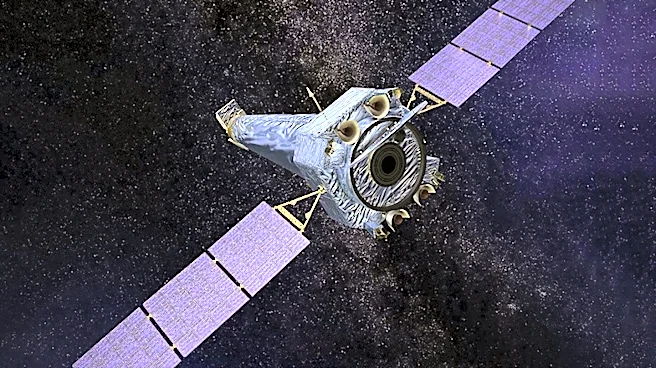
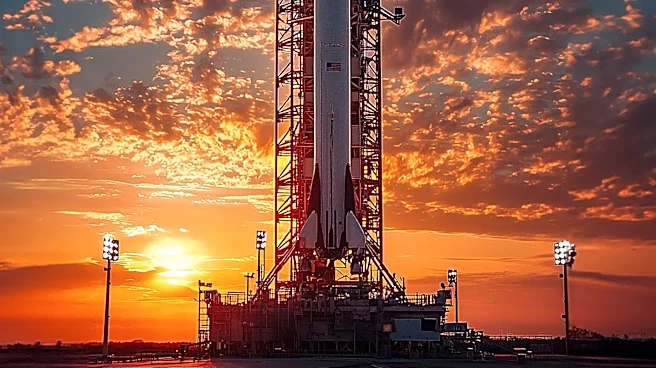
Northrop Grumman's Mission Robotic Vehicle (MRV) was launched on July 21 to test the feasibility of servicing geostationary satellites. The MRV, equipped with two seven-jointed robotic arms, is designed to inspect, relocate, and upgrade aging satellites. This
mission, developed in partnership with DARPA, NASA, and the US Naval Research Laboratory, aims to demonstrate whether satellites can be transformed into serviceable infrastructure. The MRV will spend about a year traveling to geostationary orbit before beginning its operations. This initiative builds on previous successes with Mission Extension Vehicles, which have already extended the operational life of satellites by providing propulsion and attitude control.
Why It's Important?
The MRV represents a significant advancement in satellite servicing technology, potentially revolutionizing how satellites are maintained and extending their operational life. This capability could save hundreds of millions of dollars by avoiding the need to replace satellites that are otherwise functional but have depleted their onboard propellant. The ability to service satellites in orbit could lead to more sustainable space operations and reduce space debris. This development is particularly important for geostationary satellites, which hold valuable positions and often carry critical communications and national security payloads.
What's Next?
The MRV will need to successfully complete its journey to geostationary orbit and demonstrate its servicing capabilities. If successful, this could pave the way for more widespread adoption of in-orbit servicing technologies. Future satellites may be designed with servicing in mind, incorporating features that facilitate robotic maintenance. This could lead to a new era of modular and upgradable space infrastructure, enhancing the longevity and functionality of space assets.