
What's Happening?
The Maine Center for Disease Control has confirmed a third case of the rare Powassan virus in the state this year, with an adult in Lincoln County testing positive. This follows previous cases in York
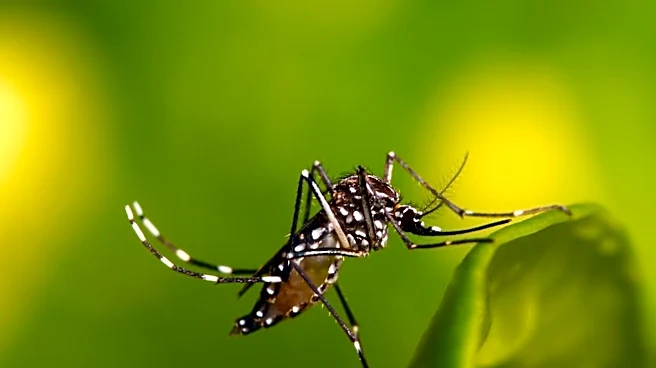
and Penobscot counties. Additionally, a wild bird in Cumberland County tested positive for West Nile virus, marking the first case of this virus in Maine for the year. Powassan virus, transmitted by ticks, is the only endemic arbovirus in Maine, while other viruses like West Nile are spread by mosquitoes. The virus can impact the brain and is transmitted more quickly than Lyme disease. Researchers are studying how ticks carrying the virus survive Maine's harsh winters.
Why It's Important?
The emergence of Powassan virus cases in Maine highlights the growing public health concern regarding tick-borne diseases. Although rare, Powassan virus can be fatal, with about 10% of severe cases resulting in death. Survivors may experience long-term health issues such as headaches and memory problems. The situation underscores the need for increased awareness and preventive measures against tick bites, especially as climate change may be contributing to the spread of ticks and tick-borne diseases. The presence of West Nile virus also indicates the need for vigilance against mosquito-borne diseases.
What's Next?
Public health officials in Maine are likely to continue monitoring and studying the spread of Powassan virus and other arboviruses. Efforts to educate the public on preventive measures, such as using insect repellent and wearing protective clothing, will be crucial. Researchers will also focus on understanding the ecology of ticks and their ability to survive in varying climates, which could inform future public health strategies. The state may also enhance surveillance and testing to quickly identify and respond to new cases.