
What's Happening?
Virginia is projected to require a massive expansion of its energy infrastructure to meet rapidly increasing demand, with scenarios indicating a need to double, triple, or even quadruple its energy production capacity by 2050. Under current policies,
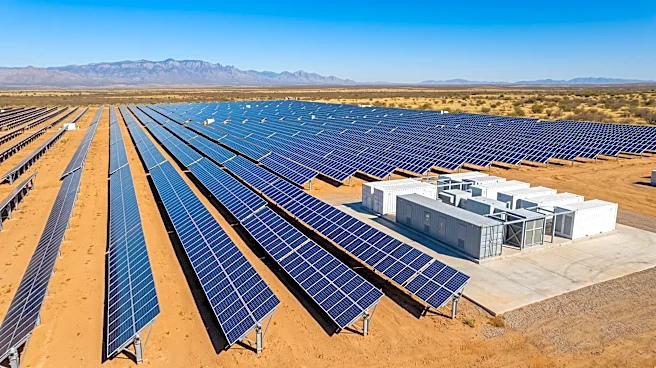
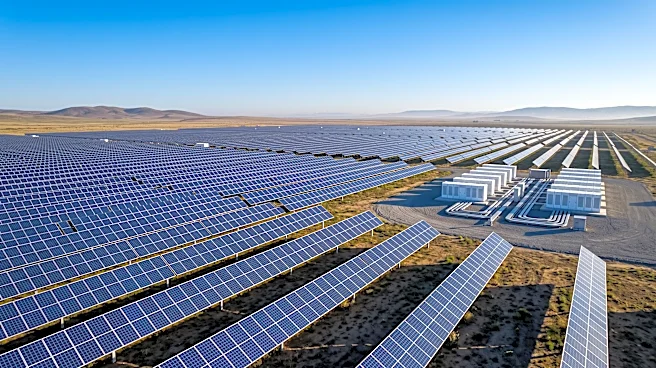
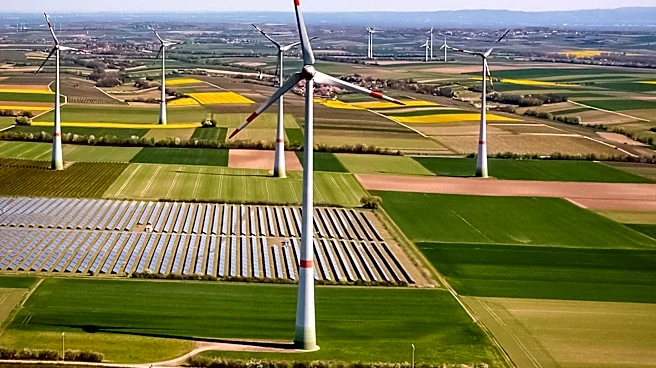
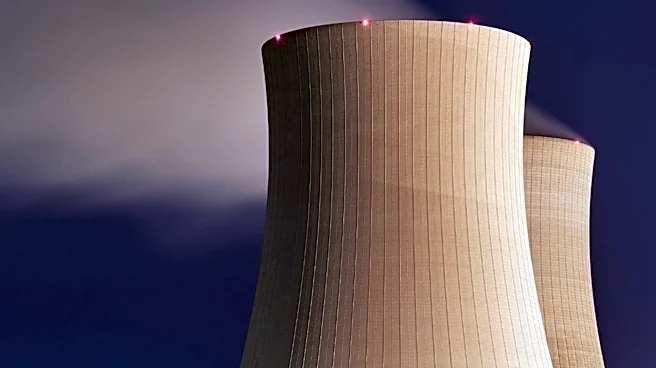
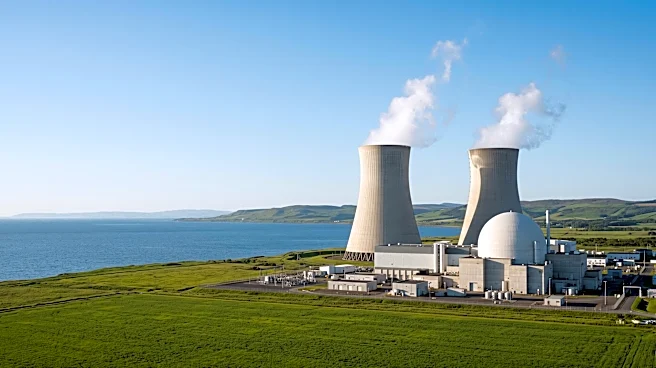
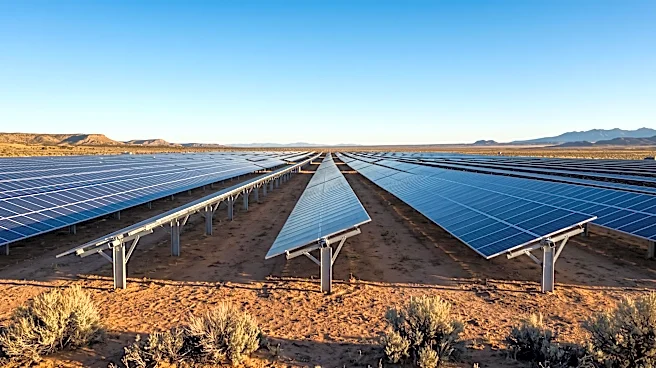
the state would need to add approximately 33,300 megawatts of solar power, requiring nearly 300,000 acres of land, which is almost twice the current solar acreage. Additionally, the plan calls for building the equivalent of 16.5 more onshore wind farms and increasing natural gas capacity by 50.9%. Crucially, the state may need to deploy up to 17 small modular nuclear reactors (SMRs) to meet its energy goals. While three SMR projects are currently proposed in Virginia—one by Dominion and Amazon at North Anna, another by Appalachian Power at Joshua Falls, and a multi-reactor facility in Amherst County by Geenex Power—these would only partially fulfill the projected nuclear demand under current policies. The governor's energy plan outlines various scenarios, all of which necessitate substantial new energy generation, highlighting the practical challenges of siting and public acceptance for these projects.
Why It's Important?
This extensive energy plan underscores the profound challenges and trade-offs Virginia faces in balancing growing energy demand, environmental goals, and public sentiment. The sheer scale of the required infrastructure, particularly the land needed for solar and the number of SMRs, will inevitably lead to significant local opposition and siting difficulties, as already seen with solar and wind projects. The reliance on SMRs, a technology not yet commercially deployed in North America, introduces an element of uncertainty regarding cost and timeline, despite their potential benefits like smaller land footprint and continuous operation. The plan also reveals a continued, albeit reduced, reliance on natural gas, which conflicts with carbon-free goals. The decisions made in Virginia will serve as a critical case study for other states grappling with similar energy transitions, demonstrating the complexities of integrating diverse energy sources, managing public resistance, and achieving ambitious climate targets while ensuring grid reliability and economic growth.
What's Next?
Virginia will need to navigate the political and practical hurdles of implementing its energy plan. This includes addressing local opposition to new solar and wind farms, potentially through state-level interventions on siting decisions. For nuclear power, the focus will be on the progress of the three proposed SMR projects and the economic viability of this nascent technology. The governor's plan recommends identifying optimal sites for advanced nuclear, including brownfields, military bases, and conversion of fossil-to-nuclear opportunities, which could shift the geographical distribution of future projects. Community engagement will be crucial, as demonstrated by the early public questions and concerns regarding the proposed Amherst County SMR. The state will also need to reconcile the continued need for natural gas with its long-term carbon reduction targets, potentially leading to debates over pipeline infrastructure and the pace of fossil fuel phase-out. The coming years will involve intense negotiations, policy adjustments, and technological advancements to realize these ambitious energy goals.
Beyond the Headlines
The Virginia energy plan highlights a deeper societal tension between the urgent need for increased energy production to support economic growth and technological advancements (like AI data centers) and the 'not in my backyard' (NIMBY) phenomenon. While there's broad agreement on the need for more energy, the specific type and location of generation facilities often face strong local resistance. This plan forces a confrontation with the reality that all energy sources, whether renewable or nuclear, have environmental footprints and require land or infrastructure that impacts communities. The ethical dimension arises in how the state will balance local autonomy with statewide energy needs and climate goals. Furthermore, the plan's reliance on SMRs, a technology with proven safety in military applications but unproven commercial economics, represents a significant leap of faith. The success or failure of Virginia's approach could set precedents for how other states manage their energy transitions, influencing national energy policy, technological investment, and the delicate balance between progress and preservation.