
What's Happening?
The Ramat Gan Safari in Israel has introduced a new male capybara named Zion to its South American exhibit. Zion, who is 1 year and 7 months old, was transferred from the Hai-Park zoo in Kiryat Motzkin,
having originally come from a zoo in Belgium. This addition aims to improve the welfare of another capybara at the safari, Capibaruch, by providing a social structure that aligns with the species' natural behavior. Capybaras are known for their social nature, and living in pairs or groups is essential for their well-being. The safari officials hope that Zion and Capibaruch will eventually be joined by a female capybara to further enhance their social environment. Currently, the two capybaras are separated by a fence but have already begun communicating with each other.
Why It's Important?
The introduction of Zion to the Ramat Gan Safari highlights the importance of social structures in animal welfare, particularly for species like capybaras that thrive in social settings. This move not only enhances the quality of life for the capybaras but also serves as an educational tool for visitors, raising awareness about South America's biodiversity. Capybaras, while not endangered, act as ambassadors for the region's wildlife, many of which face extinction threats. By showcasing these animals, the safari aims to convey conservation messages and promote biodiversity awareness among its visitors.
What's Next?
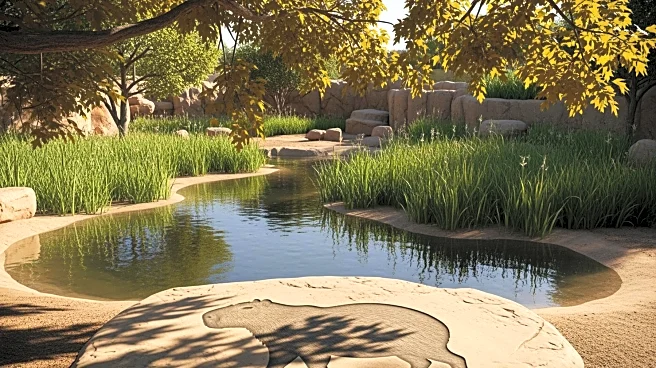
In the coming days, Zion will be introduced to the main yard with a large pool, allowing him to swim and interact more freely with Capibaruch. The safari plans to eventually introduce a female capybara to the group, further enriching the social environment for these animals. This initiative is expected to enhance visitor engagement and support conservation efforts by highlighting the importance of preserving natural habitats and species.
Beyond the Headlines
The addition of Zion to the Ramat Gan Safari underscores a broader commitment to animal welfare and conservation education. By creating environments that mimic natural social structures, zoos and safaris can improve the mental and physical health of animals in captivity. This approach not only benefits the animals but also enhances the educational experience for visitors, fostering a deeper understanding of wildlife conservation and the ecological challenges facing many species today.