








What's Happening?
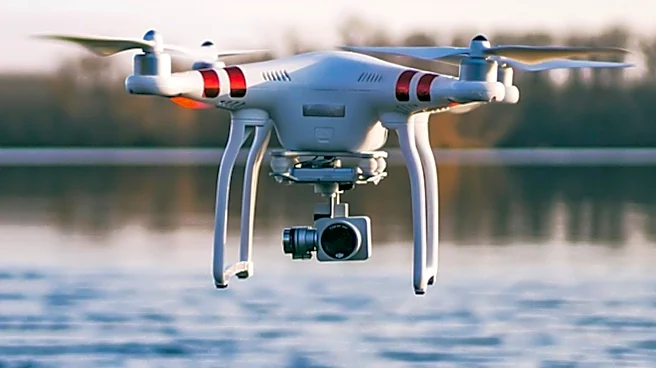
AT&T and Ericsson have showcased a new application of 5G technology for drone detection at a World Cup stadium near Dallas. The demonstration involved using network sensing over 5G to detect and track drones flying at altitudes of 300 to 400 feet in authorized
airspace. This technology leverages existing cellular networks to act as a distributed sensing platform, eliminating the need for separate sensing technologies. Ericsson's Massive MIMO radios were deployed to create a multi-static sensing configuration, utilizing advanced signal processing and AI-enabled algorithms to detect and track drones in real time. The demonstration highlighted the potential of cellular networks to enhance public safety by detecting unauthorized drones, which have been a concern during the tournament.
Why It's Important?
The demonstration by AT&T and Ericsson underscores the growing importance of integrating advanced sensing capabilities into existing cellular networks. This approach not only enhances public safety by detecting unauthorized drones but also represents a significant step towards the future of 6G technology, which promises integrated sensing and communication capabilities. The ability to use existing infrastructure for new applications can lead to cost savings and increased efficiency for public safety agencies. Moreover, as drone usage continues to rise, the need for effective detection and tracking systems becomes critical, especially in sensitive areas like sports venues and critical infrastructure.
What's Next?
The successful demonstration of 5G-based drone detection could pave the way for broader adoption of this technology in various sectors. As the 2028 Summer Olympics in Los Angeles approaches, there is potential for further demonstrations and implementations of 6G capabilities, including integrated sensing and communication. Public safety agencies and infrastructure managers may increasingly look to cellular networks as a viable solution for drone detection and other security applications. Additionally, the development of 6G technology could open new revenue streams for mobile operators and vendors by offering advanced sensing services.