







What's Happening?
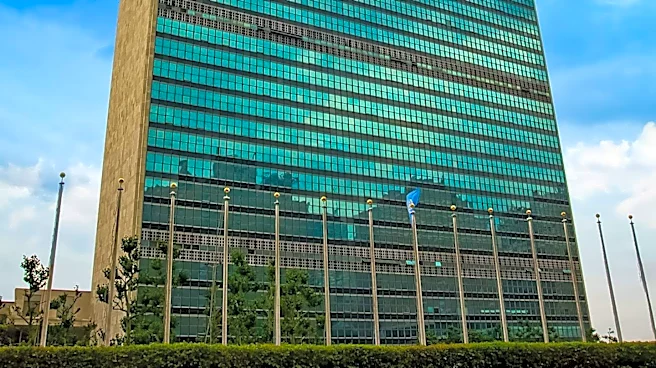
More than 50 United Nations countries have issued a joint statement calling for a complete, immediate, and unconditional ceasefire in Ukraine and urging Russia to return to the negotiating table. This call was made during an emergency UN Security Council
meeting, where Danish Foreign Minister Lars Løkke Rasmussen read out the statement. The document explicitly states that Russia's full-scale invasion of Ukraine violates the UN Charter and fundamental principles of international law, asserting that Russia's aggression has undermined the international order and poses a threat to global peace and security. The U.S. representative to the UN Economic and Social Council, Dan Negrea, echoed these sentiments, calling for a halt to strikes on civilian facilities and emphasizing that there is no military solution to the war. Ukraine's Ambassador to the UN, Andrii Melnyk, in turn, appealed to foreign partners for more weapons, particularly Patriot interceptor missiles, to protect Ukrainian civilians and proposed a global coalition to increase anti-ballistic interceptor production tenfold.
Why It's Important?
This joint statement from over 50 UN countries signifies a broad international consensus condemning Russia's actions and demanding a peaceful resolution to the conflict. The explicit declaration that Russia's invasion violates the UN Charter reinforces the legal and moral framework for international relations, highlighting the severe implications for global governance and the rule of law. The call for an immediate ceasefire and negotiations underscores the urgent humanitarian crisis and the need to prevent further loss of life and destruction. The U.S. stance, emphasizing no military solution and urging negotiations, aligns with broader international efforts to de-escalate the conflict through diplomatic means. Ukraine's plea for more advanced weaponry, particularly air defense systems, reflects the critical need for protection against ongoing attacks on civilian infrastructure and populations. The proposal for a global coalition to boost anti-ballistic interceptor production indicates a long-term strategic vision for enhancing defensive capabilities, which could reshape future military aid and defense industry collaborations. This collective international pressure aims to isolate Russia further and compel it towards a diplomatic resolution, impacting geopolitical stability and humanitarian outcomes.
What's Next?
The joint call from over 50 UN countries is expected to intensify diplomatic pressure on Russia to cease hostilities and engage in peace talks. While Russia has not indicated an immediate willingness to negotiate with U.S. envoys, the sustained international condemnation may influence its long-term strategy. Ukraine will likely continue to advocate for increased military aid, particularly air defense systems, and push for the establishment of the proposed global coalition for anti-ballistic interceptor production. The UN Security Council may face further calls to adopt resolutions demanding Russia's withdrawal and the establishment of a demilitarized zone. The U.S. and other international partners will likely continue to play a constructive role in facilitating negotiations, though the path to a lasting peace remains complex. The effectiveness of these diplomatic efforts will depend on the continued unity of the international community and the willingness of all parties to compromise. Humanitarian organizations will also continue to highlight the plight of civilians and advocate for unimpeded aid access.
Beyond the Headlines
The collective action by over 50 UN countries highlights the enduring relevance of multilateral institutions in addressing global crises, even when faced with significant geopolitical divisions. The explicit condemnation of Russia's actions as a violation of the UN Charter underscores the foundational principles of international law and sovereignty, which are critical for maintaining global order. The debate over providing more advanced weaponry to Ukraine, while aimed at self-defense, also raises questions about the potential for escalation and the long-term implications for regional security. The proposal for a global coalition to increase anti-ballistic interceptor production points to a future where collective defense and technological innovation are paramount in deterring aggression. This situation also brings to the forefront the ethical dilemma of balancing humanitarian concerns with strategic military objectives. The ongoing conflict continues to test the limits of international diplomacy and collective security, shaping the future of global governance and the protection of human rights.