







What's Happening?
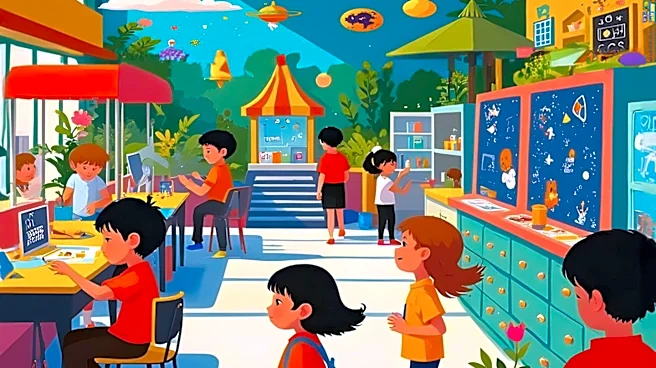
Architecture plays a crucial role in supporting education for displaced children, particularly in borderlands and refugee settlements. Schools in these areas serve as more than just educational facilities; they are vital infrastructures that provide stability
and continuity in the face of displacement. According to UNHCR, approximately 45 million of the world's forcibly displaced people were children under the age of eighteen at the end of 2025. These schools must navigate the challenges of emergency conditions while offering a sense of belonging and safety. Humanitarian architecture faces the task of creating educational environments that can adapt to uncertain futures and support the needs of displaced communities.
Why It's Important?
The role of architecture in supporting education for displaced children is significant as it addresses the urgent need for stability and continuity in the lives of those affected by displacement. By providing safe and adaptable learning environments, these schools help mitigate the impact of forced mobility and administrative uncertainty on children's education. This is crucial for the long-term development and well-being of displaced children, as education is a key factor in breaking the cycle of poverty and displacement. The architectural solutions implemented in these schools can serve as models for other regions facing similar challenges, promoting innovative and sustainable approaches to education in crisis situations.
What's Next?
As the number of displaced children continues to rise, there is a growing need for scalable and adaptable architectural solutions that can be implemented quickly and efficiently. This may involve the development of modular and prefabricated structures that can be easily transported and assembled in various locations. Additionally, collaboration between architects, educators, and humanitarian organizations will be essential in designing schools that meet the specific needs of displaced communities. Policymakers and international organizations may also play a role in supporting these efforts by providing funding and resources to ensure that all children have access to quality education, regardless of their circumstances.
Beyond the Headlines
The architectural response to education in displacement settings also raises important ethical and cultural considerations. It challenges traditional notions of schooling and encourages a reevaluation of what it means to provide education in crisis situations. This includes considering the cultural and linguistic needs of displaced communities and ensuring that schools are inclusive and accessible to all children. Additionally, the focus on creating adaptable and resilient educational environments highlights the importance of innovation and collaboration in addressing complex global challenges. As the world grapples with increasing displacement due to conflict, climate change, and other factors, the lessons learned from these architectural initiatives may inform broader efforts to support vulnerable populations.