





What's Happening?
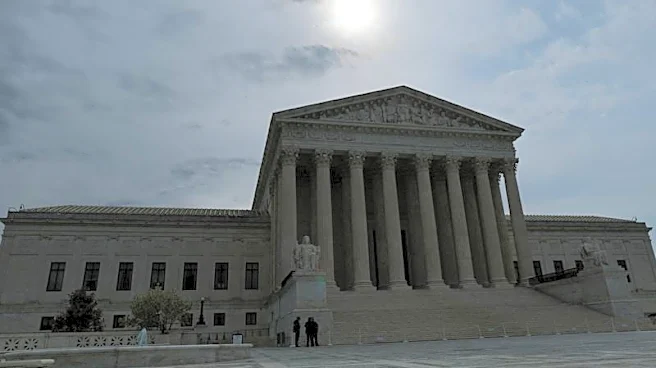
The U.S. Supreme Court is currently deliberating on the case of Chatrie v. United States, which addresses the use of geofence warrants by law enforcement to track individuals' locations via cellphone data. The case questions the extent to which police
can use such data without infringing on privacy rights. During the arguments, justices expressed concerns about the potential for government overreach, particularly in tracking individuals attending religious or political gatherings. The case follows the precedent set by Carpenter v. United States, which requires police to obtain a warrant before accessing cellphone location data. The outcome of this case could refine or uphold existing privacy protections.
Why It's Important?
The decision in Chatrie v. United States holds significant implications for privacy rights and law enforcement practices in the U.S. If the court rules in favor of limiting the use of geofence warrants, it could strengthen privacy protections and set a precedent for how digital data is used in criminal investigations. Conversely, a ruling that favors broader use of such warrants could expand law enforcement's ability to track individuals, raising concerns about surveillance and civil liberties. The case is particularly relevant in an era where digital privacy is increasingly scrutinized, and the balance between security and individual rights is a contentious issue.
What's Next?
The Supreme Court is expected to issue a nuanced decision that may not drastically alter existing laws but could clarify the conditions under which geofence warrants are permissible. The ruling will likely address the need for warrants to have reasonable geographic and temporal limits. Stakeholders, including privacy advocates and law enforcement agencies, are closely watching the case, as its outcome could influence future legislation and judicial decisions regarding digital privacy and surveillance.