





What's Happening?
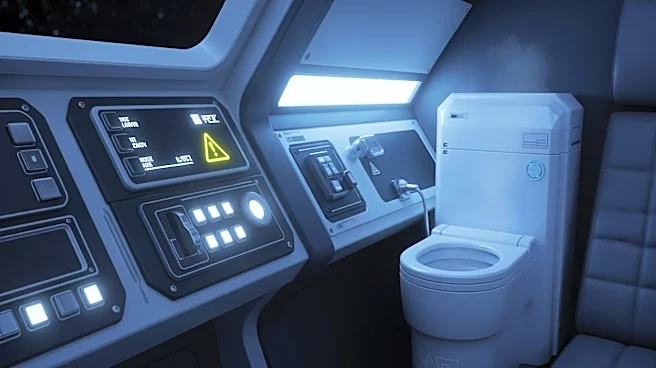
The Artemis II mission, a significant step in NASA's return to lunar exploration, encountered an unexpected challenge when the spacecraft's advanced toilet system malfunctioned. The Universal Waste Management System, designed to handle waste in microgravity,
experienced a fault shortly after launch, escalating to a frozen urine vent line. This issue required the crew, consisting of Commander Reid Wiseman, Pilot Victor Glover, Mission Specialist Christina Koch, and Canadian astronaut Jeremy Hansen, to use contingency bags while mission control worked on a solution. The problem was resolved by rotating the spacecraft to allow sunlight to thaw the blockage, restoring the system's functionality. Despite the inconvenience, the crew maintained professionalism and humor, continuing their mission towards the Moon.
Why It's Important?
This incident highlights the complexities and challenges of human space exploration, where even minor technical issues can become significant obstacles. The Artemis II mission is crucial as it tests systems and procedures for future lunar landings, including the planned Artemis III mission. Successfully managing such challenges demonstrates NASA's preparedness and the crew's ability to handle unexpected situations, reinforcing confidence in the mission's success. The mission's progress is vital for advancing human exploration beyond Earth, with implications for scientific research, international collaboration, and the future of space travel.
What's Next?
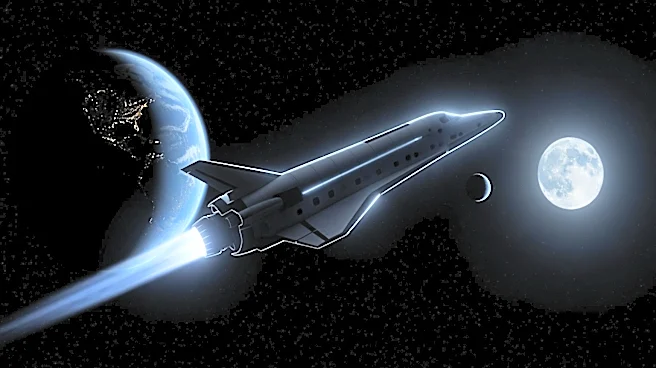
The Artemis II mission is set to continue its journey, with a planned lunar flyby offering unprecedented views of the Moon's far side. The crew will conduct high-resolution photography and live commentary during this phase. The mission is expected to conclude with a splashdown in the Pacific Ocean after approximately 10 days. The success of Artemis II will pave the way for Artemis III, which aims to land astronauts on the lunar surface, marking a significant milestone in NASA's exploration goals.
Beyond the Headlines
The toilet malfunction underscores the importance of reliable life-support systems in space missions. It also highlights the need for continuous innovation in space technology to ensure the safety and comfort of astronauts. The incident serves as a reminder of the human aspects of space travel, where basic needs must be met even in the most advanced technological environments. This experience contributes to the broader understanding of living and working in space, informing future mission designs and preparations.