
What's Happening?
India's agriculture sector is poised for significant growth, with production expected to outpace domestic demand. This has highlighted the critical role of robust warehousing in ensuring food security,
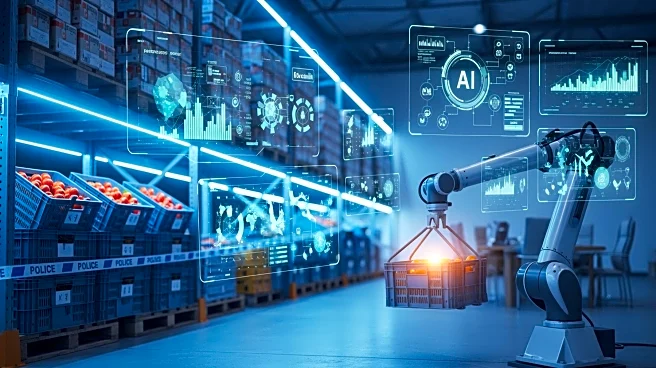
price stability, and export competitiveness. The integration of artificial intelligence (AI) into warehousing practices is transforming these facilities from static storage spaces into dynamic 'Phygital Infrastructure.' AI tools, such as predictive analytics and optimization algorithms, are being used to anticipate spoilage risks and refine logistics, thereby improving the resilience of post-harvest systems against climate and market shocks. This technological advancement is crucial as India's foodgrain production is projected to reach 368 million tonnes by 2030-31, with a potential storage deficit looming if capacity does not keep pace.
Why It's Important?
The enhancement of warehousing through AI is vital for India's agricultural sector, which is a cornerstone of its economy. By reducing post-harvest losses and improving storage conditions, AI-driven warehousing can help stabilize prices and prevent distress sales by farmers. This is particularly important as the country moves towards value-added processing and export-oriented supply chains. The ability to use stored commodities as collateral for financing also provides farmers with greater financial flexibility, reducing the need for distress sales and allowing for more strategic market participation. This development not only supports farmers but also strengthens the overall agricultural supply chain, contributing to economic stability and growth.
What's Next?
The future of India's agricultural warehousing will likely involve increased public-private partnerships to address capacity and quality gaps. These partnerships can blend private sector expertise with public support to unlock investments in underserved areas. Additionally, the continued deployment of technology and policy stability will be crucial in converting rising production into sustained economic gains. As AI and other technologies become more integrated into warehousing, the sector is expected to evolve into a more resilient and efficient system, supporting the next phase of agricultural growth in India.
Beyond the Headlines
The integration of AI in warehousing not only addresses immediate logistical challenges but also sets the stage for long-term shifts in agricultural practices. By enabling more precise and efficient storage solutions, AI can help mitigate the impacts of climate change on agriculture, ensuring that food security is maintained even in the face of environmental challenges. Furthermore, the use of technology in warehousing can drive innovation across the agricultural sector, encouraging the adoption of more sustainable and efficient farming practices.