






What's Happening?
New research presented at Neuroscience 2026, the annual meeting of the Society for Neuroscience, highlights advancements in biomarkers for neurological and psychiatric conditions. Meaghan Morris of Johns Hopkins University demonstrated that measuring
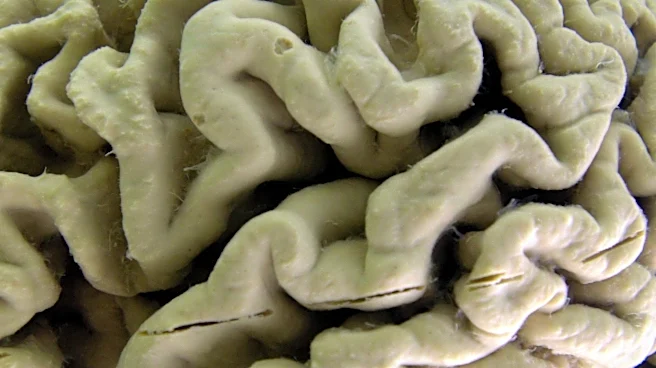
brain structures beyond the hippocampus could detect early Alzheimer’s-related neurodegeneration. Karlon H. Johnson from the University of Miami Miller School of Medicine found that some cognitively healthy older adults maintain younger-appearing brain structures despite elevated blood biomarkers linked to neurodegeneration. Additionally, Maura B. Dupont of Columbia University identified alterations in mitochondrial genes in individuals with major depressive disorder, suggesting potential new biomarker and therapeutic targets. Nisarg Desai of Emory University reported on an AI system designed to detect subtle motor symptoms in neurodevelopmental and neurodegenerative disorders. These findings aim to improve diagnosis, prognosis, and treatment monitoring for a range of complex neurological conditions.
Why It's Important?
These developments are crucial for improving the diagnosis and treatment of neurological and psychiatric disorders, which affect billions globally and are a leading cause of disability. The ability to detect conditions like Alzheimer's disease and major depressive disorder earlier and more accurately can lead to more effective interventions and better patient outcomes. For instance, identifying early neurodegeneration through brain structure measurements or blood biomarkers could allow for preventative treatments or lifestyle changes before significant cognitive decline occurs. The discovery of genetic alterations in depression opens avenues for targeted therapies. Furthermore, AI-driven detection of subtle motor symptoms could provide objective measures for disease progression, enhancing clinical trials and personalized medicine approaches. These advancements could significantly reduce the burden of these diseases on individuals, healthcare systems, and society.
What's Next?
The research presented at Neuroscience 2026 indicates a future where diagnostic tools for neurological and psychiatric conditions are more precise and accessible. The next steps involve further validation of these biomarkers in larger human populations and across diverse demographics. Clinical trials will be essential to determine the efficacy of new diagnostic methods and potential therapeutic targets identified through these biomarkers. Collaboration between academic institutions, private organizations, and national funding agencies, such as the National Institutes of Health, will continue to drive translational research. The integration of AI systems into clinical practice for detecting subtle symptoms will also require rigorous testing and regulatory approval. Ultimately, these efforts aim to translate laboratory findings into practical clinical applications that can benefit patients worldwide.
Beyond the Headlines
The development of these advanced biomarkers signifies a paradigm shift in how neurological and psychiatric disorders are understood and managed. Beyond immediate diagnostic improvements, these findings could lead to a deeper understanding of disease mechanisms, potentially revealing common pathways across seemingly disparate conditions. The use of AI in detecting subtle motor signs raises ethical considerations regarding data privacy and the potential for algorithmic bias, which will need careful navigation. Furthermore, the ability to identify individuals at high risk for neurodegenerative diseases before symptom onset could spark broader societal discussions about predictive medicine, genetic screening, and the psychological impact of early disease knowledge. These advancements also underscore the growing importance of interdisciplinary research, combining neuroscience, genetics, artificial intelligence, and clinical medicine to tackle complex health challenges.