






What's Happening?
The increasing use of drones and GPS technology in civilian life is creating new security challenges, as highlighted by recent developments in electronic warfare. The U.S. Cybersecurity and Infrastructure Security Agency (CISA) has issued guidance for
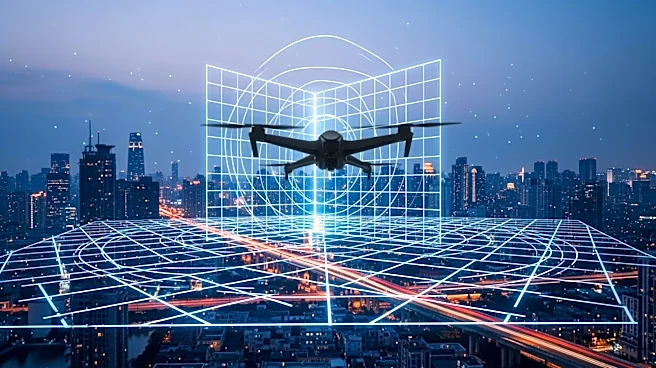
critical infrastructure operators to deploy counter-drone capabilities. This shift reflects a broader trend where technologies initially developed for military use are now impacting civilian sectors. The counter-UAS (Unmanned Aerial Systems) market is projected to reach $20 billion by 2030, driven by the need to protect against potential threats from drones and GPS disruptions. Companies are developing solutions to detect and mitigate these threats, including software that turns existing sensors into electromagnetic detectors and subscription-based civilian counter-drone systems.
Why It's Important?
The proliferation of drones and the reliance on GPS technology pose significant risks to U.S. infrastructure and public safety. As these technologies become more accessible, the potential for misuse increases, leading to concerns about privacy, security, and economic stability. The ability to disrupt GPS signals can have far-reaching consequences, affecting everything from navigation systems to emergency services. The shift towards civilian responsibility for spectrum defense highlights the need for proactive measures to protect critical infrastructure. This development underscores the importance of investing in technology and regulatory frameworks to safeguard against these emerging threats.
What's Next?
As the threat landscape evolves, it is expected that more private sector entities will adopt counter-drone technologies to protect their assets. Regulatory bodies may need to update policies to address the challenges posed by these technologies. The development of dynamic airspace management and geofencing could become more prevalent, requiring real-time network authorization for drone operations. Additionally, the integration of civilian-safe countermeasures, such as protocol-based mitigation, will be crucial in urban and sensitive environments. Stakeholders, including government agencies, businesses, and technology developers, will need to collaborate to ensure comprehensive protection against these threats.
Beyond the Headlines
The democratization of drone and GPS technology raises ethical and legal questions about privacy and surveillance. As these technologies become more embedded in daily life, the potential for abuse increases, necessitating a balance between innovation and regulation. The emergence of 'spectrum slums,' where access to clean and protected spectrum is limited to those who can afford it, highlights issues of inequality and access. This development could lead to a new form of digital divide, where only the wealthy can afford comprehensive protection against electronic threats.