



What's Happening?
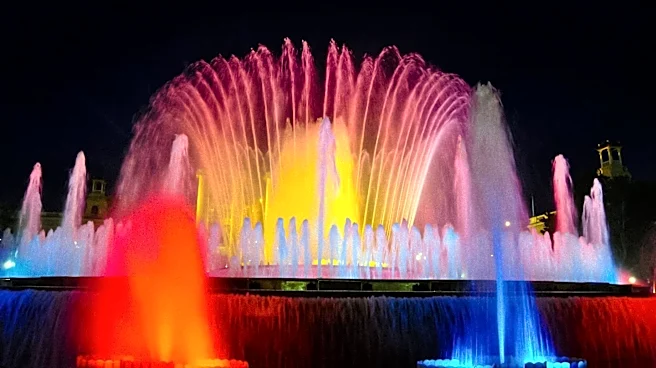
The iconic 'Fire and Water' fountain in Tel Aviv's Dizengoff Square, created by the late artist Yaacov Agam, remains a focal point of public and professional debate in Israel. The fountain, known for its kinetic art combining water, fire, light, and movement,
has been a subject of controversy since its installation in the 1980s. The recent deaths of Agam and architect Israel Goodovitch, who was involved in disputes over the fountain's placement and design, have reignited discussions about its future. The fountain's maintenance costs, technical complexity, and its role in the urban landscape have been points of contention. Despite its status as a city symbol, debates continue over its preservation and the restoration of its original components.
Why It's Important?
The ongoing debate over the 'Fire and Water' fountain highlights broader issues of art preservation, urban planning, and cultural heritage in Israel. The fountain's future impacts not only the artistic community but also the public's interaction with urban spaces. The discussions reflect differing views on how public art should evolve with changing urban environments. The resolution of this debate could set precedents for handling similar cultural and urban planning issues in Israel and beyond. The fountain's fate also ties into the legacy of Yaacov Agam, a significant figure in Israeli and international art, and how his contributions are remembered.
What's Next?
The future of the 'Fire and Water' fountain remains uncertain, with ongoing disputes between Agam's family and the Tel Aviv municipality over its restoration. A resolution could involve restoring the fountain's original components, which would require agreement on artistic and technical aspects. The outcome may influence future urban planning and public art projects in Tel Aviv and other cities. The debate also continues to engage the public and professionals in discussions about the role of art in public spaces and how to balance artistic integrity with urban development needs.