



What's Happening?
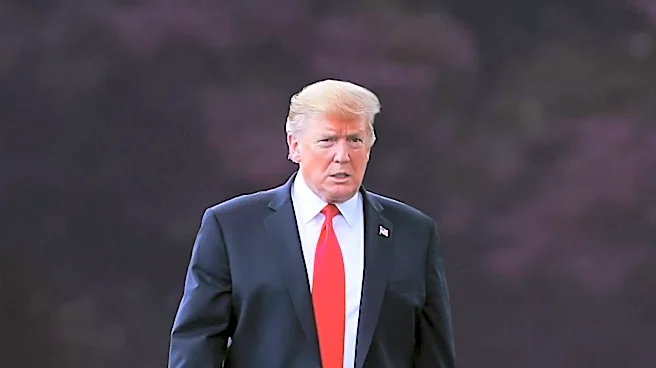
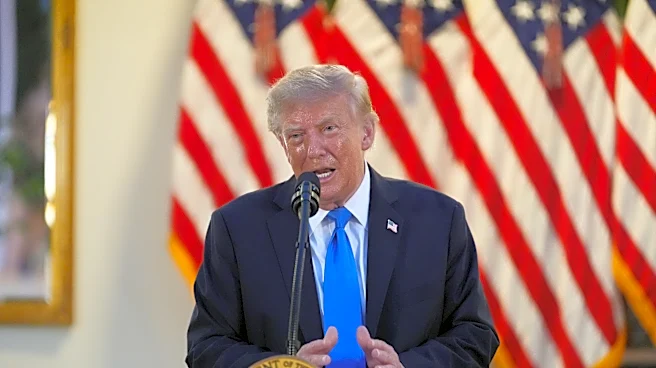
Missouri has filed an appeal with the U.S. Supreme Court, seeking to implement new congressional districts, which were supported by President Trump, for the upcoming midterm elections. This action follows a decision by Missouri’s highest court to block
the new map and mandate a statewide vote in November to determine its fate. The state's Attorney General, Catherine Hanaway, argued that no other court has ordered a change to congressional maps between a primary and a general election, describing the situation as inflicting 'unprecedented chaos' on Missouri. The new districts were designed to potentially secure an additional Republican seat and help maintain the party's slim majority in the House. Despite the new districts being used in the August primary, the state's top court ruled that the previous districts, established after the 2020 census, must be used for the general election. The appeal highlights a broader national redistricting conflict initiated by President Trump last year.
Why It's Important?
This appeal is significant as it represents a critical juncture in the ongoing national redistricting battles, which have seen President Trump actively involved in shaping electoral maps. The outcome could influence the balance of power in the U.S. House of Representatives, as the new Missouri map aims to favor Republicans by potentially adding one seat. The legal challenge also underscores the tension between state judicial decisions and federal electoral processes, particularly concerning the timing of map changes so close to a general election. A ruling in favor of Missouri's appeal would set a precedent for how states can implement or challenge redistricting plans, potentially affecting voter representation and the partisan composition of Congress. Conversely, upholding the state court's decision would empower voters through referendums on such critical electoral matters, reinforcing democratic checks and balances on legislative redistricting efforts.
What's Next?
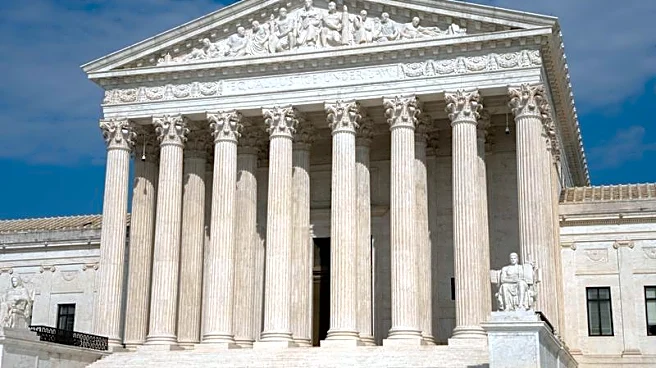
The U.S. Supreme Court will now consider Missouri's appeal, with Justice Brett Kavanaugh, who handles appeals from the region, requesting responses from critics of the new map by Monday. A state law mandates a Tuesday deadline for changes to the November ballot, adding urgency to the Supreme Court's decision. If the Supreme Court sides with Missouri, the Trump-backed congressional districts could be used in the midterms, potentially altering the electoral landscape. If the appeal is denied, the state will proceed with a statewide vote in November on whether to adopt the new map, and the previous districts will be used for the general election. This decision will also be closely watched by other states engaged in similar redistricting disputes, as it could provide guidance or set a precedent for future challenges.
Beyond the Headlines
Beyond the immediate electoral implications, this case touches upon fundamental questions of democratic governance and the role of the judiciary in electoral processes. The dispute highlights the increasing politicization of redistricting, where maps are often drawn to maximize partisan advantage rather than ensure fair representation. The involvement of President Trump in these efforts underscores a broader trend of national political figures influencing state-level electoral mechanics. The outcome could either reinforce the power of state legislatures and political parties in shaping electoral outcomes or strengthen the role of citizen referendums and judicial oversight in safeguarding electoral integrity. This ongoing struggle over district lines reflects deeper societal divisions and the continuous effort to define the parameters of fair and equitable political representation in the United States.