
What's Happening?
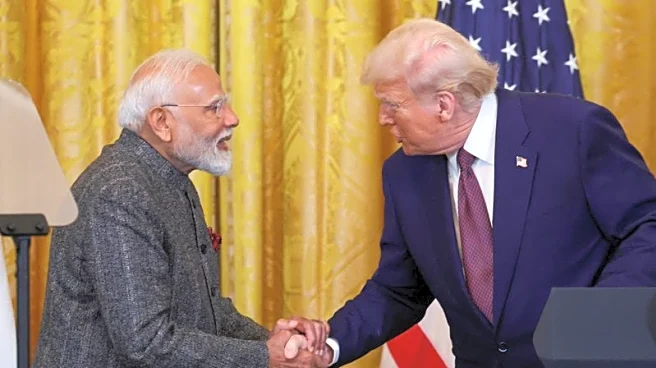
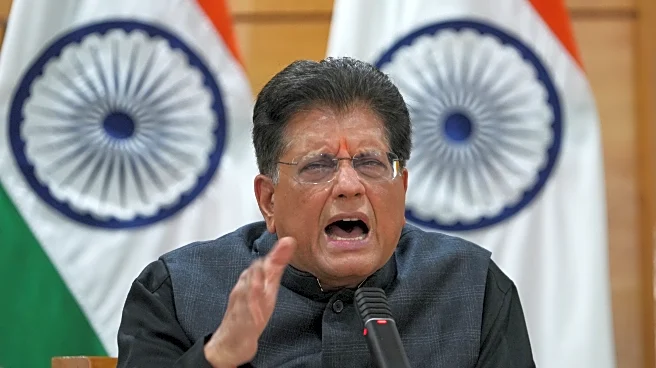
The United States and India are negotiating an interim trade agreement that involves significant concessions from India in various sectors, including agriculture, regulation, digital policy, and security
alignment. According to the Global Trade Research Initiative (GTRI), the U.S. will ease tariffs on Indian products in exchange for these commitments. The agreement includes India's pledge to align more closely with U.S. economic security policies, potentially affecting its trade relations with other countries, particularly BRICs nations. India has also agreed to reduce or eliminate tariffs on U.S. industrial goods and several agricultural products. However, there are concerns about the feasibility of India's commitment to purchase $500 billion worth of U.S. goods over five years, as major purchases like aircraft are typically decided by private companies.
Why It's Important?
This trade agreement is significant as it represents a strategic alignment between the U.S. and India, potentially reshaping global trade dynamics. The concessions made by India could enhance U.S. market access, benefiting American industries, particularly in agriculture and technology. However, the agreement may strain India's relations with other major economies and impact its domestic industries, especially if tariff reductions affect local manufacturing. The deal underscores the U.S.'s influence in setting trade standards and could serve as a model for future agreements with other countries. The focus on economic security and digital policy highlights the growing importance of these areas in international trade negotiations.
What's Next?
The interim agreement is a step towards a comprehensive U.S.-India Bilateral Trade Agreement. As negotiations continue, both countries will need to address the practical challenges of implementing the commitments, particularly India's ambitious purchase targets. The agreement's impact on India's domestic industries and its relations with other countries will be closely monitored. Stakeholders, including Indian farmer groups and manufacturers, may push back against certain concessions, influencing future negotiations. The U.S. will likely use this agreement as leverage in its trade discussions with other nations, promoting similar standards and commitments.