


What's Happening?
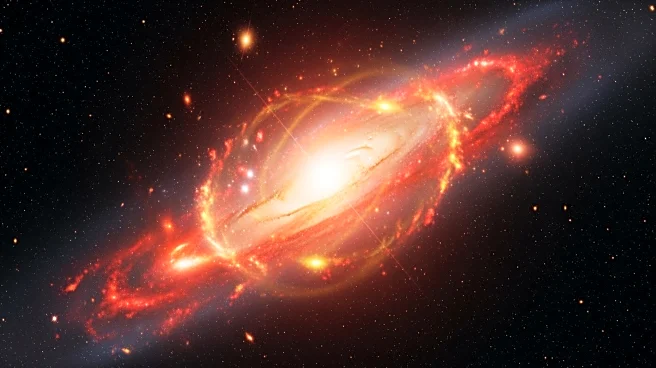
Researchers have discovered a galaxy cluster, SPT2349-56, that is hotter than the surface of the sun, challenging current theories about galaxy formation. This young cluster, formed about 12 billion years ago, was expected to be cooler than older clusters.
The unexpected heat of SPT2349-56 forces scientists to reconsider their understanding of how large cosmic structures form and evolve.
Why It's Important?
The discovery of such a hot galaxy cluster at a young age suggests that existing models of galaxy cluster formation may be incomplete. This finding could lead to new insights into the processes that govern the evolution of the universe's largest structures. Understanding these processes is crucial for developing a comprehensive model of cosmic evolution.
What's Next?
Further data collection and analysis are needed to determine whether SPT2349-56 is an anomaly or part of a broader pattern. Researchers will continue to study this cluster to uncover the mechanisms behind its unexpected heat, which could lead to revisions in current astrophysical theories.