


What's Happening?
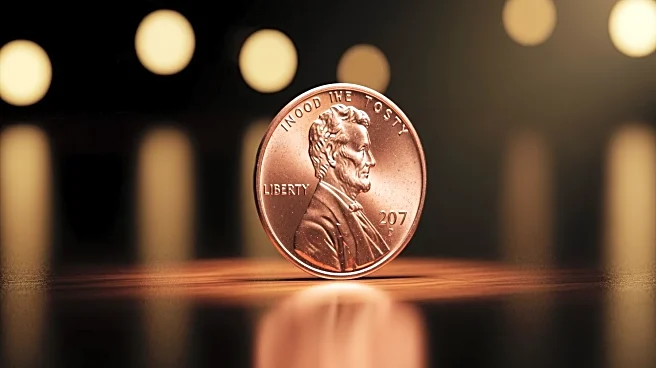
The U.S. Mint's decision to cease penny production in November led to a landmark auction by Stack's Bowers Galleries, where the final pennies ever minted were sold for a record $16.76 million. The auction featured 232 lots, each comprising three-coin
sets marked with an 'Ω' (Omega) sign, indicating their status as the last printed cents. These sets included two pennies from the Philadelphia Mint, one in 24-karat gold, and one from the Denver Mint. The most notable set, #232, fetched $800,000, setting a record for the most valuable modern U.S. numismatic item. The U.S. Mint began producing pennies in 1793, with various designs over the years, including the introduction of Abraham Lincoln's image in 1909. The recent pennies are made of copper and zinc, and the cessation of their production is expected to save the U.S. approximately $56 million annually.
Why It's Important?
The auction highlights the significant interest and value in numismatic collectibles, particularly as the U.S. Mint ceases penny production. This move reflects broader economic considerations, as the cost of producing pennies has surpassed their face value, costing 3.69 cents per penny. The decision to stop minting pennies is part of a cost-saving measure, which could influence future decisions regarding other low-denomination coins. The auction's success underscores the cultural and historical value placed on currency, even as its practical use diminishes. Collectors and investors may see increased interest in rare coins, potentially driving up prices and demand in the numismatic market.
What's Next?
While the U.S. Mint has stopped producing new pennies, existing pennies will remain in circulation. The decision may prompt discussions about the future of other coins, such as nickels and dimes, which also cost more to produce than their face value. The numismatic community may continue to see increased interest in rare and historical coins, potentially leading to more record-breaking auctions. Additionally, the U.S. Treasury and Mint may explore further cost-saving measures in currency production, possibly influencing future monetary policy and coinage decisions.