






What's Happening?
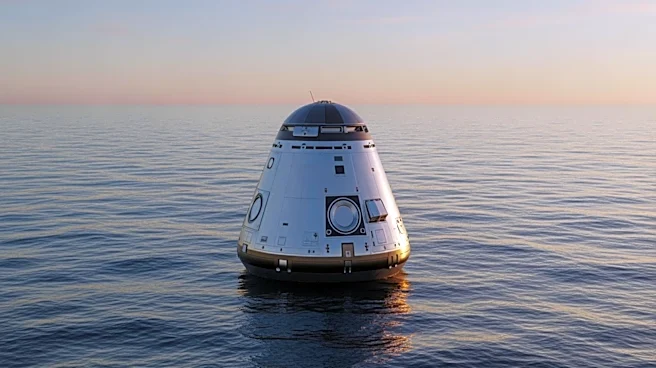
NASA's Artemis II mission has successfully concluded with the splashdown of the Orion spacecraft in the Pacific Ocean. The mission, which lasted nearly 10 days, saw the crew surpass the Apollo 13 record for the farthest crewed spaceflight. The Artemis II crew,
consisting of four astronauts, captured views of the far side of the Moon, marking significant milestones in space exploration. This mission is part of NASA's broader Artemis program, which aims to explore more of the Moon for scientific discovery and economic benefits, and to lay the groundwork for future crewed missions to Mars.
Why It's Important?
The successful completion of the Artemis II mission represents a significant step forward in NASA's efforts to return humans to the Moon and eventually send them to Mars. By achieving new records in space travel, NASA is advancing its capabilities in deep space exploration, which could lead to new scientific discoveries and technological advancements. The mission also underscores the importance of international collaboration in space exploration, as it involves partnerships with other countries and space agencies. The progress made through the Artemis program could have far-reaching implications for the U.S. space industry, potentially leading to economic growth and increased global leadership in space exploration.
What's Next?
Following the success of Artemis II, NASA plans to continue with the Artemis program, which includes more complex missions to the Moon. These future missions will focus on establishing a sustainable human presence on the Moon, which is seen as a critical step towards preparing for human missions to Mars. NASA will likely continue to collaborate with international partners and private companies to achieve these goals. The next steps will involve further testing and development of technologies needed for long-duration space travel and lunar habitation.