
What's Happening?
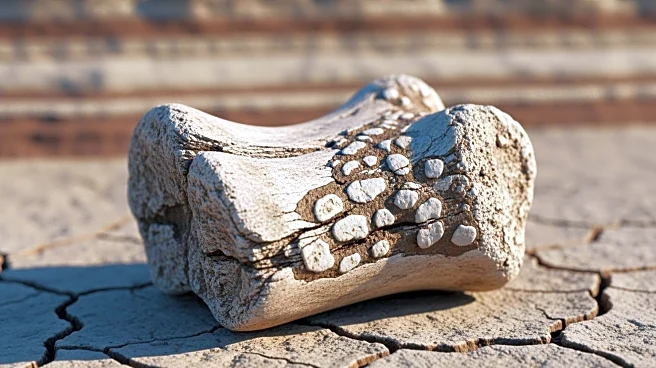
Researchers have successfully analyzed metabolism-related molecules preserved in fossilized bones from animals that lived 1.3 to 3 million years ago. This study, published in Nature, provides insights
into ancient climates and landscapes, revealing warmer and wetter conditions than today. By examining metabolites, scientists reconstructed details about ancient diets, health, and environmental exposure. This approach, rarely applied to fossils, offers a new perspective on ancient life, complementing traditional DNA studies. The research was led by Timothy Bromage from NYU College of Dentistry, who highlighted the potential of metabolomics in understanding early life.
Why It's Important?
This breakthrough in fossil analysis could revolutionize our understanding of ancient ecosystems and the evolutionary history of species. By providing detailed insights into past climates and environments, the study enhances our knowledge of how ancient species adapted to their surroundings. This information is crucial for predicting how current species might respond to ongoing climate change. Additionally, the ability to study ancient metabolic processes opens new avenues for research in evolutionary biology and paleontology, potentially leading to discoveries about the origins and adaptations of early life forms.