






What's Happening?
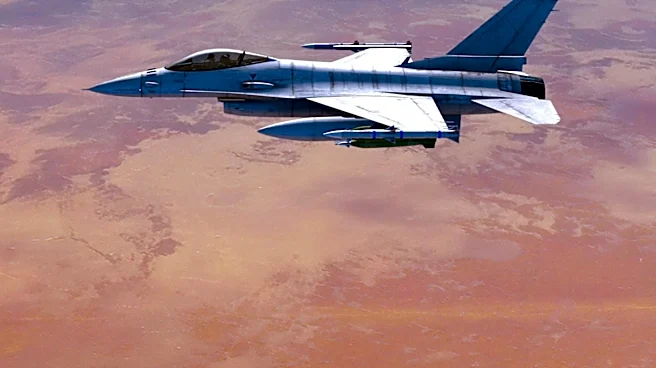
Turkish Air Force F-16 fighter jets have successfully completed a long-range rotation mission between Somalia and Turkey, covering over 11,000 kilometers (6,835 miles) in two sorties without intermediate landings. The mission involved pilots from the
161st Squadron of Turkey's 6th Main Jet Base Command, operating between Mogadishu and Bandırma in northwestern Turkey's Balıkesir. The total distance covered was 11,038 kilometers (5,960 nautical miles) over 55 hours. This operation was part of scheduled aircraft maintenance rotations under the Turkish Task Force Air Component Command in Somalia. The Turkish Defense Ministry stated that the flights averaged more than 5,500 kilometers per sortie, a distance necessitating aerial refueling support for fighter aircraft without intermediate stops. Turkey initially deployed three F-16 fighter jets to Somalia on January 28, 2026, expanding its military presence in the East African nation, with the aircraft stationed at Aden Adde International Airport in Mogadishu.
Why It's Important?
This mission is significant as it demonstrates Turkey's strategic force projection capabilities and its continued commitment to stability in East Africa. The successful execution of such a long-range deployment without intermediate landings highlights the advanced operational capabilities of the Turkish Air Force, particularly in terms of aerial refueling and sustained flight operations. This capability allows Turkey to extend its military reach and influence far beyond its immediate borders, supporting its foreign policy objectives and security interests in regions like East Africa. The deployment of F-16s and the establishment of military infrastructure in Somalia, including its largest overseas military base and training facility, underscore Turkey's growing role as a regional power and its investment in security partnerships. This also signals to other international actors Turkey's capacity to conduct complex air operations at considerable distances.
What's Next?
Following this successful long-range mission, Turkey is likely to continue leveraging its enhanced air force capabilities to support its strategic interests and military presence in East Africa. The ongoing training of Somali security personnel at Turkey's military base in Somalia, alongside the provision of military training in Turkey for Somali soldiers, indicates a sustained commitment to strengthening Somalia's defense capabilities. Future operations may involve similar long-range deployments for maintenance, training, or operational support, further solidifying Turkey's logistical and operational expertise. This demonstration of force projection could also lead to increased military cooperation with other nations in the region or influence Turkey's approach to other international security engagements, as it showcases a proven ability to sustain air operations over vast distances.
Beyond the Headlines
The successful execution of this mission has broader implications beyond immediate military logistics. It underscores a strategic shift in Turkey's defense posture, emphasizing self-reliance and the ability to project power independently. This capability can enhance Turkey's bargaining power in international relations and its role in regional security architectures. Ethically, the sustained military presence and training efforts in Somalia raise questions about long-term stability and the potential for external influence in internal affairs, though Turkey frames its involvement as contributing to regional stability. Legally, such long-range deployments operate within international airspace and require careful diplomatic coordination, highlighting the complexities of modern military operations. Culturally, Turkey's engagement in Somalia, including military and humanitarian aid, reflects a broader foreign policy that seeks to build influence through various means, potentially fostering deeper ties and mutual dependencies.