









What's Happening?
The American Nurses Association (ANA) is pursuing a legal challenge against the U.S. Department of Education regarding its decision to exclude graduate nursing degrees from the definition of professional degree programs, which impacts federal student
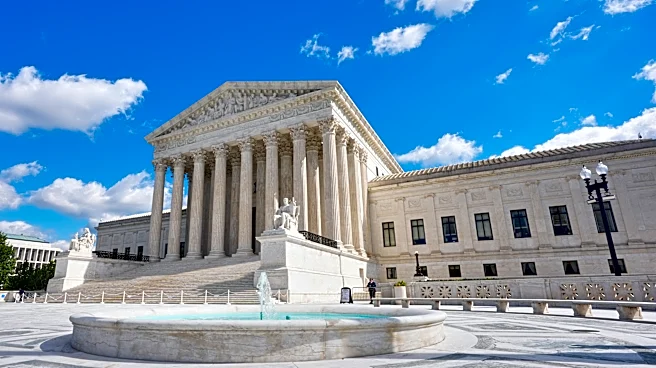
loan limits. ANA President Jennifer Mensik Kennedy announced that a court hearing is scheduled for December 2 before U.S. District Judge Patti B. Saris in Massachusetts. This lawsuit aims to protect access to higher federal student loan limits for nurses pursuing advanced degrees. Under current federal student loan frameworks, graduate students typically face annual borrowing limits of $20,500, while those in qualifying professional degree programs can borrow up to $50,000. Nursing organizations argue that this exclusion creates financial barriers for nurses seeking advanced education, potentially affecting patient care access. Despite extensive campaigns and petitions, the Department of Education proceeded with the rule, maintaining its definition is lawful.
Why It's Important?
The outcome of this lawsuit holds significant implications for the future of nursing education and healthcare in the U.S. If the ANA is successful, it could ensure that aspiring nurse practitioners, nurse anesthetists, and other advanced practice registered nurses (APRNs) have access to the necessary federal funding to pursue their education. Conversely, if the Department of Education's rule stands, it could create substantial financial hurdles, potentially deterring nurses from pursuing advanced degrees. This could exacerbate existing healthcare provider shortages, particularly in specialized nursing fields, and impact the quality and accessibility of patient care. The case also highlights a broader debate about how professional degrees are defined and funded, potentially setting a precedent for other fields that may face similar reclassification challenges.
What's Next?
The December 2 court hearing is a critical step in this legal battle, with the ANA hoping for a summary judgment by the end of the year. While current court orders temporarily protect some Master of Science in Nursing (MSN), Doctor of Nursing Practice (DNP), and Doctor of Nursing Anesthesia Practice (DNAP) students, the long-term eligibility for higher loan limits remains uncertain. The litigation centers on the Department of Education's authority to establish requirements beyond federal law, particularly in light of the Supreme Court's 2024 decision in Loper Bright Enterprises v. Raimondo, which overturned the Chevron doctrine. The plaintiffs are urging the court to issue a ruling before the end of 2026 and the start of the spring 2027 academic semester to provide clarity for students and educational institutions.
Beyond the Headlines
This legal challenge extends beyond just student loan limits; it touches upon the recognition and valuation of advanced nursing roles within the broader healthcare system. The ANA's argument that excluding graduate nursing degrees from professional status creates financial barriers implicitly questions whether the current federal framework adequately supports the development of a highly skilled nursing workforce. The potential for reduced federal borrowing options could force students into private loans or delay their education, impacting the pipeline of advanced practice nurses. This situation could also prompt a re-evaluation of federal policies that define and fund professional education, potentially leading to a more inclusive approach that recognizes the evolving demands of various critical professions, including nursing.