



What's Happening?
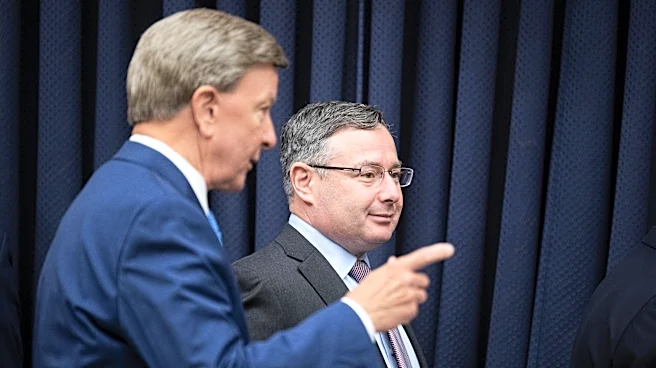
Malian Prime Minister Abdoulaye Maïga met with Turkish Vice-President Cevdet Yılmaz on November 10 to discuss strengthening bilateral relations. The discussions, held on the sidelines of the 31st UN Climate Change Conference (COP31) in Antalya, focused
on cooperation in defense, mining, energy, infrastructure, and education. They also addressed the potential resumption of Turkish Airlines flights to Bamako. Malian Foreign Minister Abdoulaye Diop emphasized Mali's desire for access to modern technologies and equipment, as well as technology transfer, to develop its own defense capabilities. Diop noted Mali's intention to diversify its international partners, moving away from dependencies, a sentiment underscored by the broad participation of countries like Russia, China, Türkiye, and the United States at the second BAMEX 2026 International Defence and Security Exhibition in Bamako.
Why It's Important?
This development is significant for U.S. foreign policy and security interests in Africa. Mali's stated goal of diversifying its defense partners and reducing dependence on specific countries could alter regional power dynamics. The involvement of Russia and China in the BAMEX exhibition, alongside the U.S. and Türkiye, highlights a growing competition for influence in the Sahel region. For the U.S., this could mean a need to re-evaluate its engagement strategies to maintain its standing and counter the expanding presence of rival powers. The emphasis on technology transfer and the development of Mali's indigenous defense industry also suggests a long-term shift in how African nations approach their security, potentially leading to more self-reliant but also more complex security landscapes.
What's Next?
Further discussions and agreements are expected to follow the initial talks between Mali and Türkiye, particularly in the areas of defense and economic cooperation. The resumption of Turkish Airlines flights could boost economic ties and facilitate greater exchange between the two nations. Mali's participation in international defense exhibitions and its stated policy of broadening partnerships indicate a continued effort to secure diverse support for its security and development needs. The U.S. and other international actors will likely monitor these evolving relationships to understand their implications for regional stability and their own strategic interests in Africa.
Beyond the Headlines
The Malian government's push for technology transfer and the development of its own defense industry reflects a broader trend among developing nations to assert greater autonomy and reduce reliance on former colonial powers or traditional allies. This shift could lead to a more multipolar global security environment, where smaller nations leverage competition among major powers to secure better terms and more diverse support. However, it also presents challenges, as increased access to advanced military technology could contribute to regional arms races or instability if not managed carefully. The long-term implications for human rights and governance in Mali, given its transitional government, will also be a critical aspect to observe as these defense partnerships evolve.