





What's Happening?
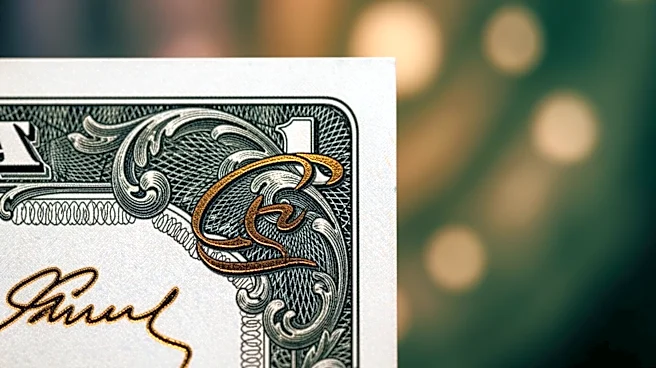
The U.S. Treasury Department, under the leadership of Secretary Scott Bessent, has announced that President Trump's signature will be featured on future U.S. paper currency. This decision is part of the celebrations for the country's 250th anniversary.
The move is seen as a way to honor President Trump's contributions and achievements. Secretary Bessent stated that this initiative is a powerful recognition of the historic achievements of the United States and President Trump. This announcement is part of a broader trend where President Trump has been branding various federal properties and initiatives with his name, including policies like TrumpRX and Trump Gold Card, as well as federal buildings displaying banners with his image.
Why It's Important?
The inclusion of President Trump's signature on U.S. currency is significant as it reflects a broader trend of personal branding within federal governance, which some experts argue is reminiscent of practices in authoritarian regimes. This move could have implications for how presidential legacies are perceived and the role of personal branding in public office. It raises questions about the separation between personal and public interests in governance. The decision may also influence public perception of the presidency and its association with individual leaders rather than the office itself. This could impact future administrations and how they choose to honor past presidents.
What's Next?
As the Treasury Department moves forward with this initiative, there may be reactions from political leaders, historians, and the public regarding the appropriateness of such personal branding on national currency. Discussions may arise about the precedent this sets for future presidents and the potential implications for democratic values. Additionally, there could be legal and logistical steps involved in the production and distribution of the new currency, which may require further announcements from the Treasury Department.
Beyond the Headlines
The decision to feature President Trump's signature on currency could have deeper cultural and ethical implications. It challenges traditional norms of how presidents are commemorated and raises questions about the role of personal legacy in public service. This move may also influence how future leaders approach their own legacies and the extent to which they engage in personal branding while in office. The broader cultural impact could include shifts in how the public views the presidency and its association with individual personalities.