





What's Happening?
A former Secretary of Homeland Security has proposed a significant restructuring of the U.S. homeland security apparatus, suggesting the elimination of the Department of Homeland Security (DHS) as it currently exists. The proposal advocates for the creation
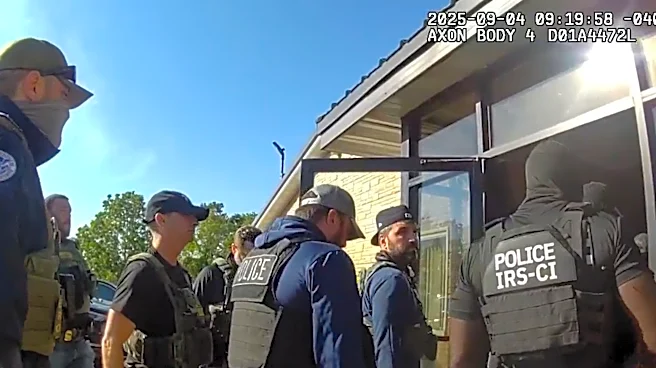
of a new Cabinet-level department that would consolidate a majority of federal law enforcement agencies, including the FBI, DEA, ATF, ICE, Customs and Border Protection, Homeland Security Investigations, the Coast Guard, the Secret Service, the Marshals Service, the Federal Protective Service, and the Federal Air Marshal Service. This new department would be led by a secretary empowered to streamline and deconflict law enforcement missions. The recommendation stems from the belief that the current federal law enforcement landscape is fragmented, leading to overlaps, competition, and inefficient use of resources. The former Secretary argues that domestic law enforcement and security should be under the purview of a single Cabinet-level official, similar to models in other nations, while allowing individual agencies to retain their distinct cultures and brands.
Why It's Important?
This proposal carries significant implications for U.S. national security, law enforcement, and public policy. A consolidation of federal law enforcement agencies under one department could enhance coordination, reduce redundancies, and potentially improve the nation's ability to respond to evolving threats, both domestic and international. It aims to address long-standing issues of inter-agency competition and lack of unified oversight, which can lead to critical matters falling through the cracks. Such a restructuring would fundamentally alter the operational dynamics of numerous federal agencies, impacting their budgets, jurisdictions, and strategic priorities. For the public, it could mean a more coherent and effective approach to security, but also raises concerns about the concentration of power and potential impacts on civil liberties. The debate around this proposal would involve extensive congressional review, stakeholder input from various agencies, and public discourse on the optimal balance between security and individual freedoms.
What's Next?
The former Secretary's recommendations are part of a broader discussion on the future of homeland security, particularly as the nation approaches the 25th anniversary of 9/11. While this is a proposal from a former official, it could spark renewed debate in Congress regarding the efficacy and structure of DHS and other federal law enforcement entities. Any move towards such a significant reorganization would require legislative action, likely involving extensive hearings, expert testimonies, and political negotiations. Stakeholders, including current agency heads, civil liberties advocates, and national security experts, would undoubtedly weigh in, presenting diverse perspectives on the feasibility and desirability of such a consolidation. The discussion could also lead to more incremental reforms if a full departmental overhaul proves too challenging to achieve politically.
Beyond the Headlines
The proposal to consolidate federal law enforcement agencies touches upon fundamental questions about governance, accountability, and the balance of power within the U.S. federal system. Creating a single, powerful domestic security department could centralize intelligence gathering and operational command, potentially making the nation more resilient against complex threats like terrorism and cyberattacks. However, it also raises concerns about potential overreach, the politicization of law enforcement, and the erosion of checks and balances. The ethical implications of such a powerful entity, particularly concerning surveillance, data privacy, and the use of force, would be paramount. Furthermore, the cultural integration of diverse agencies with distinct histories and missions would present a significant management challenge. This debate reflects a continuous effort to adapt national security structures to a rapidly changing threat landscape while upholding democratic principles and protecting civil liberties.