





What's Happening?
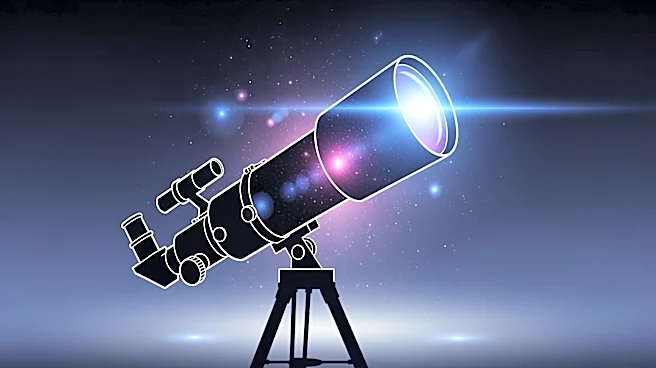
Telescope manufacturer Vaonis has introduced two new models in its line of smart telescopes, the Vespera III and Vespera Pro 2. These high-end telescopes are designed to offer improved night sky viewing experiences, building on the success of previous
models. The Vespera III and Pro 2 feature advancements in optical design, which Vaonis claims will enhance color contrast, reduce chromatic aberration, and ensure edge-to-edge sharpness for astrophotography. These smart telescopes are equipped with built-in image sensors and automatic mounts controlled via smartphone apps, allowing users to easily locate and photograph celestial objects. Despite their advanced features, the price tags of $2,490 for the Vespera III and $2,990 for the Vespera Pro 2 may not appeal to budget-conscious amateur astronomers.
Why It's Important?
The introduction of the Vespera III and Vespera Pro 2 highlights the growing trend of smart telescopes in amateur astronomy. These devices simplify the process of stargazing and astrophotography, making it more accessible to beginners and casual enthusiasts. By automating complex tasks such as alignment and tracking, smart telescopes lower the barrier to entry for those interested in exploring the night sky. Vaonis, along with competitors like Unistellar and Celestron, is at the forefront of this technological shift, which could lead to increased interest and participation in astronomy. The enhanced features of these new models may also set a new standard for quality and performance in the smart telescope market.
What's Next?
As Vaonis continues to innovate in the smart telescope industry, the company may further expand its product line to include more affordable options for a wider audience. The success of the Vespera III and Pro 2 could encourage other manufacturers to develop similar products, potentially leading to increased competition and technological advancements in the field. Additionally, the integration of new features such as USB-C support and anti-fog systems in these models may become standard in future releases, further enhancing the user experience. The ongoing development of smart telescopes is likely to continue driving interest in amateur astronomy, potentially leading to new discoveries and a deeper understanding of the universe.