







What's Happening?
U.S. Trade Representative Jamieson Greer has reiterated the commitment of both the United States and the European Union to comply with their trade agreement, despite recent tensions over new U.S. tariffs. These tariffs, proposed by the Trump administration,
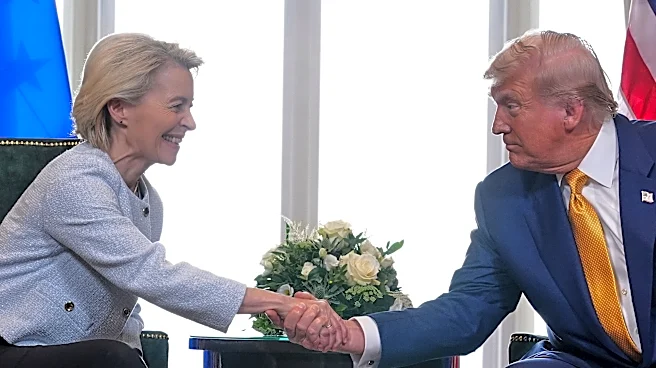
target imports from 60 economies, including the EU, due to concerns over forced labor practices. The EU is currently in the process of ratifying the trade deal, which was initially agreed upon at President Trump's Turnberry golf resort. However, the imposition of tariffs has sparked criticism from EU officials, who argue that the bloc is being unfairly targeted.
Why It's Important?
The ongoing tariff dispute highlights the challenges in maintaining international trade agreements amidst differing national policies on labor standards. The U.S. tariffs could lead to increased costs for European goods, potentially affecting trade volumes and economic relations between the two regions. The situation underscores the importance of aligning trade policies with ethical considerations, such as labor rights, and the potential for such issues to influence diplomatic relations. The outcome of these negotiations could set a precedent for how similar disputes are handled in the future.
What's Next?
The European Parliament is expected to continue its deliberations on the trade deal, with the potential for further negotiations to address the concerns raised by the new tariffs. Both the U.S. and EU will need to engage in diplomatic discussions to resolve the dispute and ensure the successful implementation of the trade agreement. The situation may also prompt other countries to reassess their trade policies and labor standards, as the global community increasingly prioritizes ethical considerations in commerce.