







What's Happening?
Global Health EDCTP3, supported by the Coalition for Epidemic Preparedness Innovations (CEPI) and the UK Department of Health and Social Care (DHSC), has announced an investment of over €64 million into five research networks across sub-Saharan Africa.
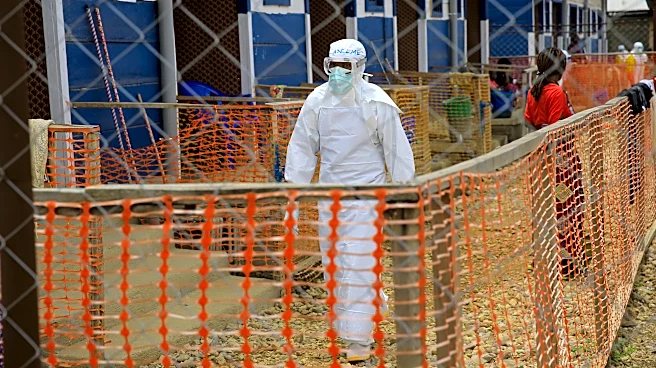
This initiative aims to enhance epidemic preparedness and clinical research capacity in the region. The funding will support projects focused on strengthening disease surveillance, laboratory infrastructure, and clinical trial readiness. These networks will also facilitate training for researchers and foster collaboration among research institutions, enabling countries to launch studies more rapidly during outbreaks and generate crucial evidence for public health responses. The effort comes as outbreaks of Ebola, mpox, and cholera continue to underscore the need for robust research systems capable of quickly evaluating interventions. The networks are already being considered for support in responding to the ongoing Bundibugyo Ebola virus outbreak in the Democratic Republic of the Congo (DRC).
Why It's Important?
This significant investment is crucial for bolstering Africa's ability to respond to health emergencies, which has direct implications for global health security. By strengthening research systems and clinical trial capabilities in sub-Saharan Africa, the initiative aims to reduce the time it takes to develop and deploy vaccines, treatments, and diagnostics during outbreaks. This aligns with CEPI's '100 Days Mission,' which seeks to compress the development timeline for countermeasures against new threats. Improved preparedness in Africa can prevent localized outbreaks from escalating into regional or global pandemics, thereby protecting populations worldwide. The collaboration between African and European institutions also fosters knowledge transfer and builds sustainable health infrastructure, reducing reliance on external aid during crises and empowering local scientists and public health officials.
What's Next?
The five newly funded networks—PRESERVE, EACCR4, WANETAM-4, SINCEP-Africa, and ACT-PREP—will commence their operations, focusing on their respective regional and thematic areas. These include strengthening laboratory systems, improving outbreak surveillance, establishing adaptive clinical trial tools, and enhancing coordination between researchers and public health authorities. The networks are expected to become active platforms for rapid response during future health emergencies, potentially providing in-kind support to ongoing trials like the Tumaini Phase 2/3 clinical trial for the Bundibugyo virus in the DRC. Continued collaboration with international partners like CEPI and NIHR will ensure sustained funding and technical support, further integrating these African networks into the global epidemic preparedness framework.
Beyond the Headlines
The initiative represents a strategic shift towards proactive rather than reactive global health security. By investing in long-term partnerships and capacity building within sub-Saharan Africa, it addresses systemic weaknesses that have historically hampered effective outbreak responses. This approach not only enhances scientific capabilities but also promotes health equity by empowering African nations to lead their own health interventions. The emphasis on 'One Health' in networks like PRESERVE highlights the interconnectedness of human, animal, and environmental health, recognizing that many emerging infectious diseases originate at this interface. This holistic perspective is vital for preventing future pandemics and fostering a more resilient global health ecosystem, moving beyond crisis management to sustainable preparedness.