
What's Happening?
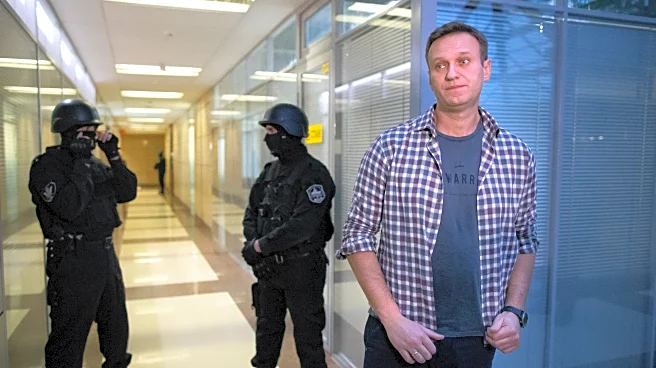
European leaders from the United Kingdom, France, Germany, Sweden, and the Netherlands have issued a joint statement asserting that Russian opposition leader Alexei Navalny was likely poisoned while in a Russian prison. The statement is based on an analysis
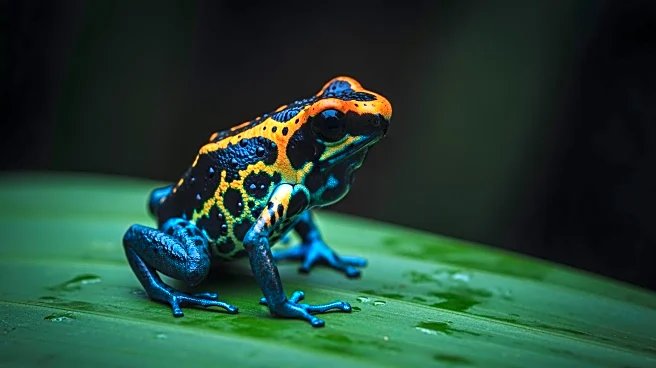
of samples that confirmed the presence of epibatidine, a potent toxin found in poison dart frogs. This contradicts Russia's claim that Navalny died of natural causes. Navalny, a vocal critic of Russian President Vladimir Putin, was known for his anti-corruption campaigns and protests against the Kremlin. He was previously poisoned with the nerve agent Novichok in 2020, an incident he attributed to an assassination attempt by Putin. Navalny was sentenced to 19 years in an Arctic penal colony, where he died in February 2024. His widow, Yulia Navalnaya, has publicly stated that her husband's death is now a 'science-proven fact.'
Why It's Important?
The assertion by European leaders that Navalny was poisoned has significant implications for international relations and human rights advocacy. It highlights ongoing tensions between Russia and Western nations, particularly concerning the use of chemical weapons and the treatment of political dissidents. The incident underscores the risks faced by opposition figures in Russia and raises questions about the country's adherence to international treaties like the Chemical Weapons Convention. The European leaders' statement may lead to increased diplomatic pressure on Russia and could influence future policy decisions regarding sanctions or other measures aimed at holding Russia accountable for its actions.
What's Next?
The European leaders have indicated that they will use all available policy levers to hold Russia accountable for Navalny's death and its alleged use of chemical weapons. This could involve coordinated diplomatic efforts, economic sanctions, or legal actions through international bodies. The situation may also prompt further investigations into Russia's compliance with international chemical weapons agreements. Additionally, the case could influence the strategies of other political dissidents in Russia and impact the broader geopolitical landscape, particularly in terms of Russia's relations with Western countries.
Beyond the Headlines
The poisoning of Alexei Navalny raises deeper ethical and legal questions about the use of chemical weapons and the protection of political dissidents. It highlights the challenges faced by international bodies in enforcing compliance with treaties like the Chemical Weapons Convention. The incident also reflects broader cultural and political dynamics within Russia, where dissent is often met with severe repercussions. The case may serve as a catalyst for renewed discussions on human rights and the role of international organizations in safeguarding political freedoms.