


What's Happening?
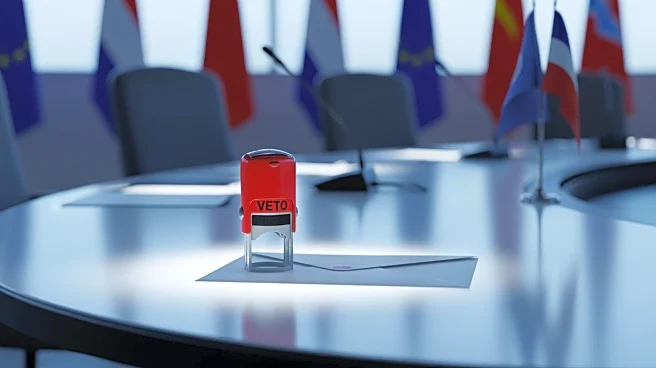
Hungarian Prime Minister Viktor Orbán is currently blocking a €90 billion loan from the European Union intended for Ukraine. This move has escalated tensions within the EU, as the loan is crucial for Ukraine amidst ongoing conflicts. Orbán's decision
is linked to Hungary's economic concerns, particularly disruptions in the Druzhba pipeline, which delivers Russian oil to Hungary. These disruptions, reportedly caused by Russian strikes, have been used by Orbán to justify his veto, effectively tying Ukraine's financial aid to Hungary's energy security. EU leaders are now faced with a dilemma: proceed with the loan and risk a public veto showdown with Orbán, or delay the package, potentially withholding critical aid from Ukraine.
Why It's Important?
The blockade of the EU loan by Hungary's Prime Minister has significant implications for both Ukraine and the European Union. For Ukraine, the delay in financial aid could hinder its ability to manage ongoing conflicts and economic challenges. For the EU, Orbán's actions highlight internal divisions and the complexities of decision-making within the union. The situation underscores the potential for individual member states to influence broader EU policies, especially when national interests are at stake. This standoff could lead to a reevaluation of Hungary's role and influence within the EU, potentially affecting its access to EU funds and voting rights.
What's Next?
The EU is likely to face increased pressure to resolve this impasse, especially as Ukraine's need for financial support becomes more urgent. If Orbán continues to block the loan, the EU may consider punitive measures against Hungary, such as stripping it of voting rights or tightening access to EU funds. The outcome of Hungary's upcoming elections could also influence the EU's approach, as a change in leadership might alter Hungary's stance. Regardless of the election results, EU leaders will need to address the broader implications of Orbán's veto and its impact on EU unity and decision-making processes.