







What's Happening?
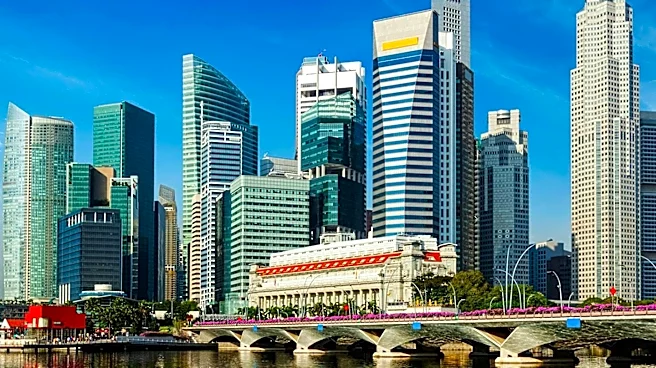
Singapore has issued its inaugural carbon credit project authorization under the Singapore–Rwanda Implementation Agreement. This project aims to reduce emissions by approximately 780,000 tCO₂e by 2030. A key component of the initiative is to improve access
to safe drinking water for about 1.8 million people in Rwanda through the distribution of 300,000 gravity-led ceramic water filters. By providing these filters, the project reduces the need for boiling water using firewood, thereby decreasing carbon emissions. Grace Fu, Singapore's Minister, highlighted this as a significant milestone for Singapore’s international carbon market cooperation, emphasizing that it puts the partnership with Rwanda into action. The authorized credits can be utilized by carbon tax-liable facilities in Singapore to offset their carbon tax obligations or potentially be procured by the Singaporean Government to support its national climate targets.
Why It's Important?
This authorization marks a tangible step in operationalizing international carbon market cooperation, demonstrating how environmental commitments can translate into measurable benefits for both climate action and local communities. For Singapore, it provides a mechanism for companies to meet their carbon tax obligations and for the government to advance its climate targets through internationally recognized carbon credits. This initiative also showcases a model where climate finance directly supports sustainable development goals, such as improving public health and reducing deforestation in Rwanda. The project's focus on providing safe drinking water addresses a critical humanitarian need while simultaneously achieving significant emissions reductions. This integrated approach highlights the potential for carbon markets to drive co-benefits beyond just carbon abatement, fostering economic development and social well-being in partner countries. The success of such projects can build confidence in the integrity and effectiveness of carbon markets as a tool for global climate action.
What's Next?
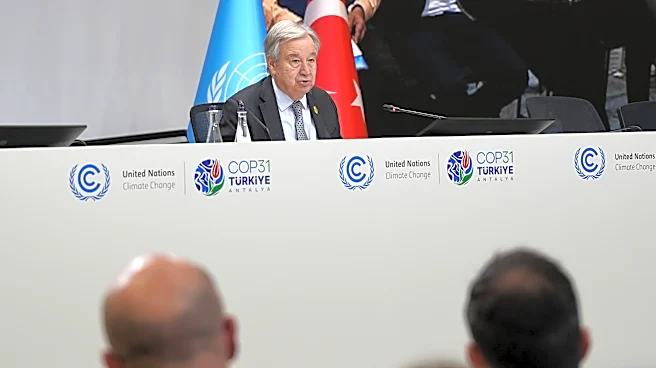
As Singapore continues to forge more partnerships, this initial authorization under the Singapore–Rwanda Implementation Agreement sets a precedent for future collaborations in the international carbon market. The success of this project in Rwanda will be closely watched as a model for how carbon credits can deliver both environmental and social benefits. The ability of carbon tax-liable facilities in Singapore to utilize these credits will likely encourage further participation from the private sector in similar initiatives. Minister Grace Fu's intention to seek more partnerships at COP31 suggests an expansion of Singapore's carbon market cooperation efforts, potentially leading to more bilateral agreements and projects. The implementation and long-term operational accountability of such projects will be crucial for their sustained impact and the credibility of the carbon market. Future developments will likely focus on scaling this model, addressing implementation challenges, and ensuring robust monitoring and verification of emissions reductions and co-benefits.
Beyond the Headlines
The Singapore-Rwanda partnership exemplifies a broader trend in climate finance where developed nations are increasingly looking to support emissions reduction projects in developing countries through carbon market mechanisms. This approach, while offering significant potential for climate action and sustainable development, also raises important considerations regarding equity, transparency, and the distribution of benefits. The project's focus on ceramic water filters highlights a practical, technology-based solution that directly impacts daily lives and reduces reliance on traditional, carbon-intensive practices. However, the long-term sustainability of such interventions depends on local capacity building, maintenance, and continued community engagement. The broader implication is the evolving role of carbon markets beyond mere offsetting, moving towards a more holistic framework that integrates climate action with socio-economic development. This shift necessitates careful consideration of project design, governance, and the potential for unintended consequences, ensuring that the benefits are genuinely realized by the communities involved and that the environmental integrity of the credits is maintained.