




What's Happening?
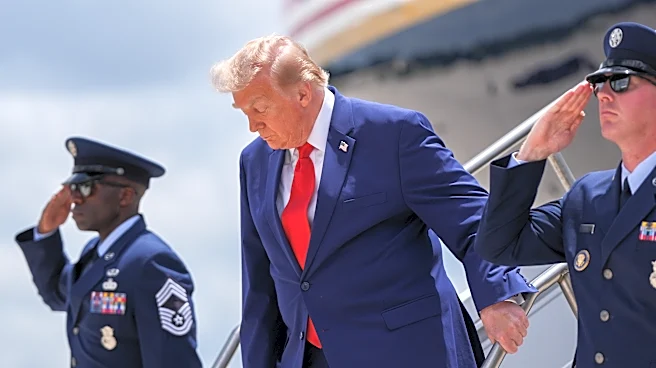
Concerns about President Trump's health have been raised following his recent appearances, where he appeared fatigued and had difficulty breathing during a press conference at the G7 summit. Former Fox News anchor Bill O'Reilly, a long-time friend of
Trump, has publicly advised the President to take a month off to rest and recuperate. O'Reilly suggested that Trump could manage ongoing international issues, such as the conflict with Iran, remotely. Despite these concerns, the White House maintains that Trump is in good health, citing his energy and accessibility compared to previous presidents.
Why It's Important?
The health of a sitting U.S. president is of significant public interest, as it can impact their ability to govern effectively. President Trump's health concerns come at a time of heightened international tensions, particularly with Iran, and domestic challenges. Any perceived weakness could affect his political standing and influence both domestically and internationally. The situation also highlights the pressures faced by world leaders and the importance of maintaining health and well-being while in office. Public and media scrutiny of Trump's health may continue to grow, influencing public perception and political discourse.
What's Next?
If President Trump heeds advice to take a break, it could temporarily shift the dynamics of his administration's approach to international and domestic issues. The administration may need to adjust its communication strategy to reassure the public and allies of Trump's capability to lead. Additionally, ongoing health concerns could become a focal point in political debates and media coverage, potentially affecting Trump's political capital and policy initiatives. The situation may prompt discussions about the health and fitness of political leaders more broadly, influencing future electoral considerations.