






What's Happening?
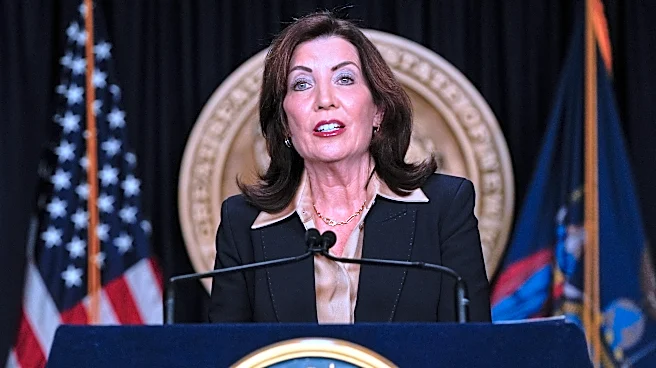
New legislation in New York, Maryland, and Connecticut aims to curb the use of personal data by retailers to adjust pricing, a practice known as surveillance pricing. However, these laws primarily empower state attorneys general to enforce the rules,
leaving private litigators and consumer advocates with limited ability to sue. This has raised concerns among consumer protection advocates who argue that without the ability to bring private claims, it will be challenging to hold companies accountable. The laws vary by state, with New York requiring companies to disclose their use of algorithms for pricing, while Maryland's law focuses on food vendors and includes exemptions for promotions and loyalty programs.
Why It's Important?
The introduction of these laws represents a significant step in regulating how personal data is used in commerce, aiming to protect consumers from potentially discriminatory pricing practices. However, the limited scope for private litigation could hinder effective enforcement and consumer protection. This situation highlights the ongoing debate over the balance between regulatory oversight and the rights of consumers to seek redress. The effectiveness of these laws could influence future legislative efforts in other states and shape the national conversation on data privacy and consumer rights.
What's Next?
As these laws take effect, consumer advocates may push for amendments that allow for greater private enforcement. Meanwhile, businesses are likely to continue lobbying against regulations they perceive as overly restrictive. The outcome of these legislative efforts could prompt other states to consider similar measures, potentially leading to a patchwork of regulations across the country. Additionally, the response from the tech and retail industries will be crucial in determining how these laws are implemented and enforced.